I’ve been using red light therapy for the last 12 months, but does it actually work?
Red light therapy seems to be everywhere at the moment, and it’s supposed to help with everything from wrinkles and hair growth to muscle recovery, joint pain and better sleep.
You name it, and red light therapy is supposed to fix it.
But what does the science actually say? And more importantly, is any of it going to make a noticeable difference to you and your life?
As always, I’m testing these things out so that you don’t have to waste your money on something that might not be worth it.
I started using red light therapy around a year ago when I was gifted the FliKEZE SpectraPanel, and whilst there are some areas where I haven’t noticed a significant difference, there are others where I’ve been really quite impressed.
In this post, I’m going to break down the benefits of red light therapy, look at what the human research tells us, share my own personal experience and help you decide whether it’s something worth investing in.
I’ll also explain the difference between red light, near-infrared and far-infrared, what wavelengths you should be looking for and how to incorporate red light therapy into your regular wellness routine.
Disclosure: The FliKEZE SpectraPanel and Lumbar Neo Back featured in this review were gifted to me. This post contains affiliate links, which means I may earn a commission if you purchase through them, at no additional cost to you.
Use Code EMMA to save 10%
Watch My Red Light Therapy Review
If you’d prefer to watch rather than read, you can check out my full video below, where I talk through the research, my experience and demonstrate how I use my red light therapy devices.
What Is Red Light Therapy and How Does It Work?
Red light therapy, also referred to as photobiomodulation, sounds a little fancy, but we’re going to keep the science simple.
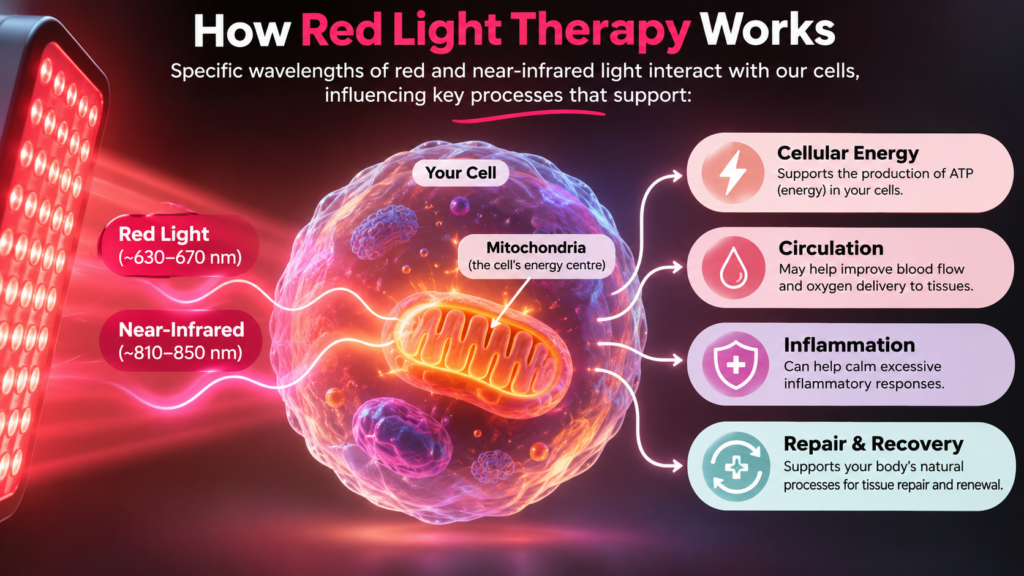
Essentially, certain wavelengths of red and near-infrared light appear to interact with our cells and influence processes involved in cellular energy, circulation, inflammation and repair.
You might remember from back in school that the mitochondria are often referred to as the powerhouse of our cells.
They help to produce something called ATP (adenosine triphosphate), which is essentially the energy that our cells use to function.
Research suggests that certain wavelengths of light can influence mitochondrial activity and cellular signalling, potentially supporting the processes involved in inflammation, tissue repair and recovery.
There have also been a number of small human studies showing changes in markers of mitochondrial metabolism following near-infrared light exposure.
All of which is quite exciting, though it is an area that does require further research,
However, just because something can influence what’s happening at a cellular level doesn’t necessarily mean it’s going to make a dramatic difference to how we look or feel.
So let’s get into the actual benefits of red light therapy and look at where the science is most promising.
What Are the Benefits of Red Light Therapy?
There are a number of potential benefits associated with red light therapy, including:
- Improving skin texture and the appearance of fine lines and wrinkles.
- Supporting collagen production.
- Supporting hair growth in certain types of hair loss.
- Reducing delayed onset muscle soreness (DOMS).
- Supporting muscle recovery following exercise.
- Helping to manage certain types of joint and muscle pain.
- Potentially improving sleep quality.
The evidence isn’t equally strong for all of these benefits, and your results are also going to depend on the device you’re using, the dose of light you’re receiving and how consistently you’re using it.
So let’s look at each of these in a little more detail.
Red Light Therapy for Skin, Collagen and Anti-Ageing
Let’s start with probably the most popular benefit of red light therapy, and the reason so many women are investing in those red light face masks.
Everyone and their neighbour seems to have one at the moment.
These masks are marketed as being able to improve fine lines, wrinkles, overall skin appearance and brightness, whilst helping to support collagen production.
And there is actually some encouraging science behind this, which is probably why we’ve seen such a rapid increase in the popularity of these devices.
Human studies have found that certain red light treatments can improve skin texture, fine lines and wrinkle measurements, with some also showing improvements in collagen density.
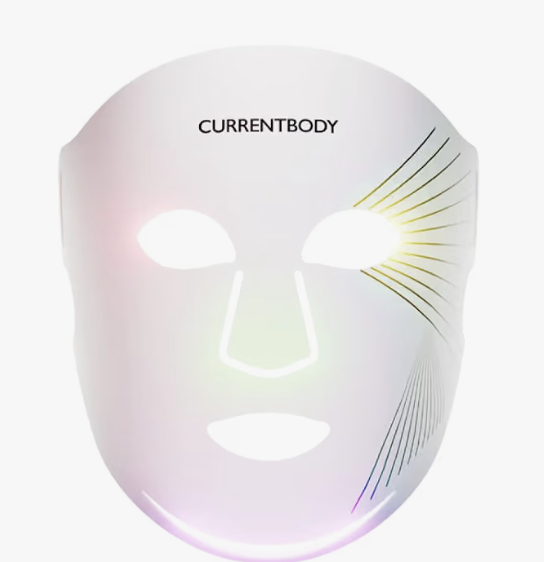
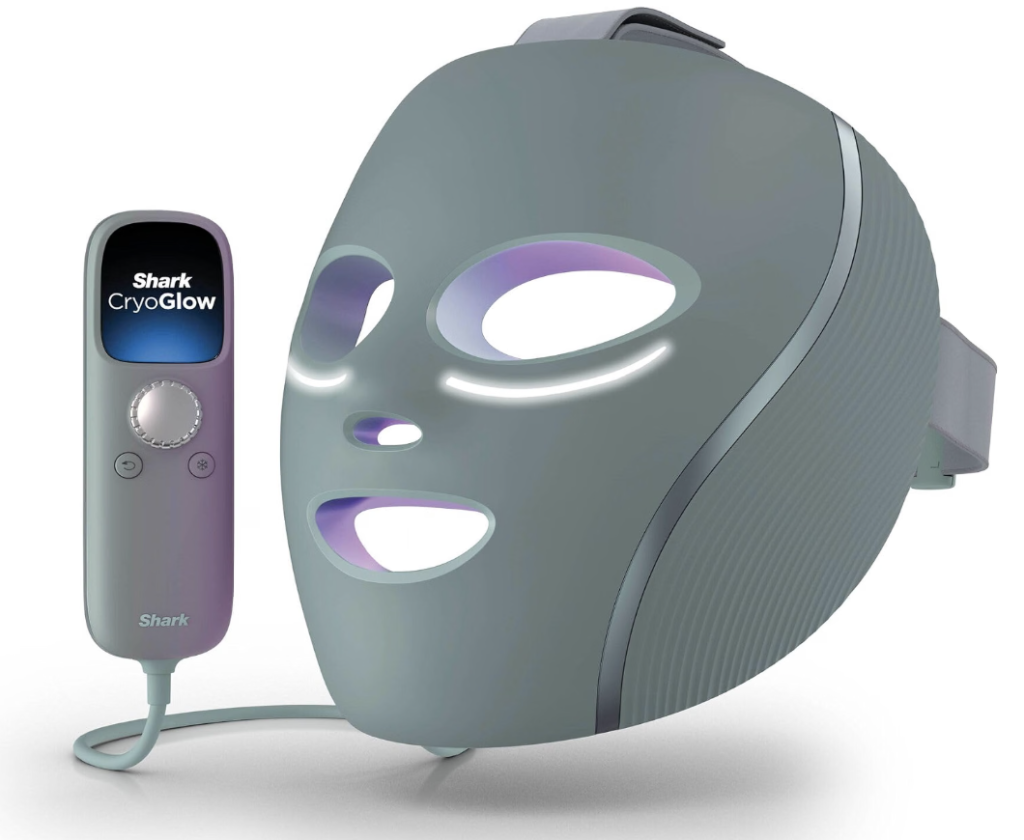
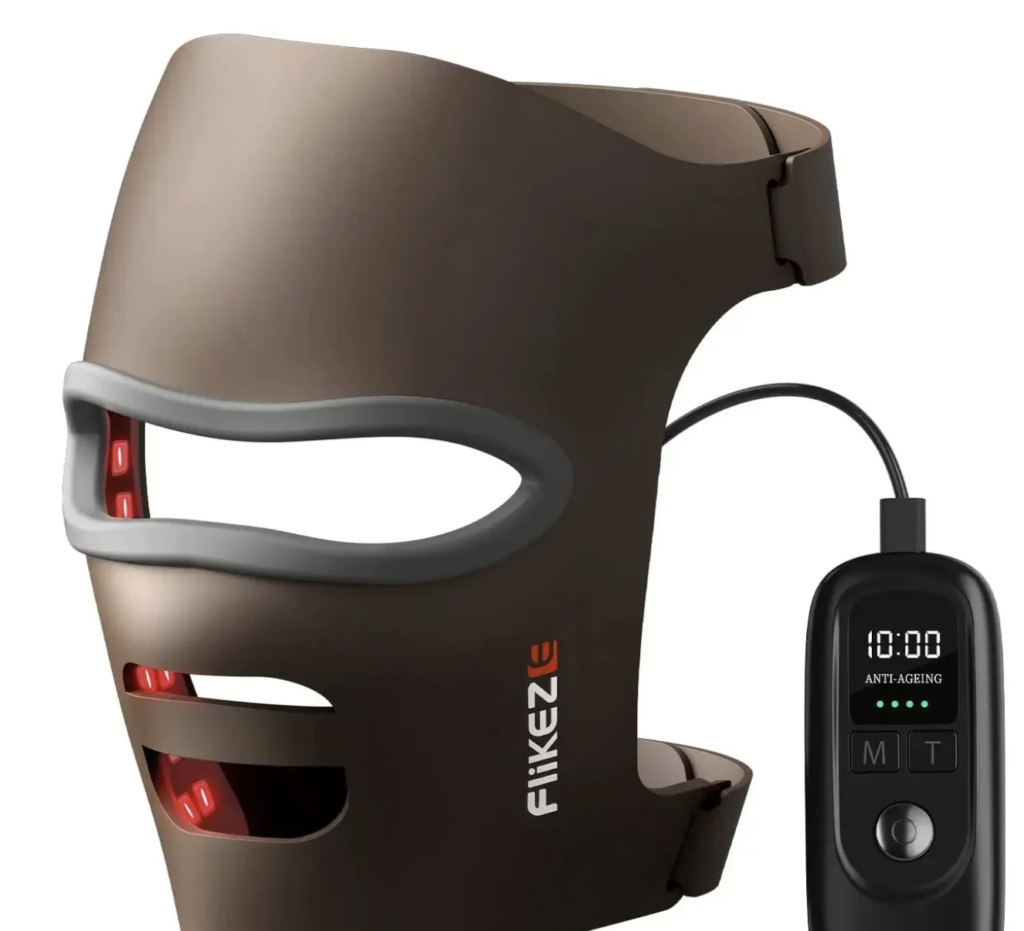
| Feature | CurrentBody Series 2 | Shark CryoGlow | FliKEZE PhotonMask Quint |
|---|---|---|---|
| Red light | 633 nm | 630 nm | 660 nm |
| Near-infrared light | 830 & 1072 nm | 830 nm | 850 nm |
| Blue light | No | 415 nm | 415 nm |
| Yellow light | No | No | 590 nm |
| Green light | No | No | 532 nm |
| Under-eye cooling | No | Yes | No |
| Treatment time | 10 minutes | 6–8 minutes | 10–15 minutes |
| Flexible silicone design | Yes | No | Yes |
| Fine lines and wrinkles | Yes | Yes | Yes |
| Blemish treatment mode | No | Yes | Yes |
| Price range | £499 | £299 | £299 |
| Best for | Dedicated anti-ageing and skin rejuvenation | Anti-ageing, blemishes and under-eye puffiness | Affordability and multiple skin concerns |
| Where to buy | SHOP NOW | SHOP NOW | SHOP NOW |
Has Red Light Therapy Improved My Skin After 12 Months?
I’ve been using my red light panel for around a year now, but I do think skin is probably one of the hardest areas to measure.
As someone who is now over the age of 40, I’m 43 at the time of writing this, I’ve always prided myself on having quite good skin.
I’ve never had Botox, I’ve never had fillers, and I’ve never had any kind of cosmetic procedures done.
And for a 43-year-old, I do think my skin looks quite good.
However, I can’t put that down to using red light therapy.
I also take a collagen supplement, make sure I’m drinking enough water and work on maintaining healthy eating and lifestyle habits. All of those things go hand in hand with having good skin.
I think it’s important to remember this when we’re looking at all of the dramatic before-and-after pictures that we’re going to see online.
Yes, there is some evidence to show that red light therapy can have a visible effect on the skin, but in my own personal experience, I haven’t noticed anything particularly significant.
Perhaps it’s helping me to maintain the skin that I already have, which is probably largely down to a combination of genetics and good health practices but I have noticed that I rarely get skin breakouts.
Is Red Light Therapy Good for Preventing Wrinkles?
I think this is where we need to manage our expectations.
If you already have quite deep wrinkles and you’re expecting red light therapy to completely reverse those, you’re probably going to be disappointed.
However, if you’re someone who is interested in supporting your skin as you age, then I think this is where red light therapy becomes more interesting.
I’ve always felt that I have quite good skin, and at the age of 43, I’m trying to maintain that as best I can.
If there’s some evidence that using red light on my face may help support collagen production at a time in my life when collagen naturally declines, then I’m definitely interested in that.
Although we don’t yet know how effective regular red light therapy is at preventing wrinkles over the long term, I personally look at it more as a way of supporting my skin as I age than expecting it to be some sort of miracle cure.
Also, keep in mind that your skin is going to be massively influenced by many other things, whether we’re talking about your hydration, nutrition, sun exposure or skincare routine.
I do swear by a good skincare routine.
Mine consists largely of castor oil, and I also absolutely swear by the Elemis Pro-Collagen day and night creams.
Yes, they are on the pricier side, but I’ve used them for a very long time, and they are some of my absolute favourite products for my skin.
My favourite skincare products:
Does Red Light Therapy Help With Eye Bags and Dark Circles?
One of my main problem areas when it comes to my skin is the dark circles underneath my eyes.
I did a whole video on my experience of using castor oil, and I do still use it, probably more so in the winter than I do in the summer.
Related post: My Experience of Using Castor Oil on My Face
It’s not a complete fix, but I personally find that it helps to moisturise the area and makes my under-eyes look a little brighter.
Unfortunately, I haven’t noticed that red light therapy has made a significant difference to my eye bags or dark circles.
What does seem to make a difference for me is being really consistent with using castor oil, and I also notice that my under-eyes tend to look worse when my diet isn’t as good.
I don’t necessarily think there is a magical fix for my particular under-eye concerns without going down the route of some sort of cosmetic intervention.
So again, I think we need to take all of this into perspective.
The changes you experience from red light therapy for skin health are probably going to be fairly subtle.
If you’re happy to invest in something that may offer those subtle improvements and help support your skin as you age, then absolutely go for it.
But if you’re looking for some sort of miracle cure, red light therapy probably isn’t going to be it.
Red Light Therapy for Hair Growth
Hair growth is another area that I’ve been particularly interested in, especially as someone who has always had quite thin hair.
With ageing and my history of PCOS, I had developed quite a receding hairline.
This has already massively improved since I did my rosemary oil experiment, and I do think that the regular scalp massage I was doing alongside the rosemary oil was an important part of that.
Related post: My Rosemary Oil for Hair Growth Experiment and Results
Having also been on a GLP-1 weight loss journey, I was very aware that I didn’t want to lose any more hair.
Hair shedding can be a significant issue for some people when they experience substantial weight loss, so I’ve been very intentional about supporting my hair health throughout that journey.
Related post: My Mounjaro Weight Loss Journey
Again, that goes hand in hand with your health habits. Your nutrition is so incredibly important when it comes to hair health.
Does Red Light Therapy Actually Work for Hair Growth?
When we look at the science behind red light therapy and hair growth, there is actually a growing body of evidence to suggest that it can help.
It’s one of the better-researched applications of red light therapy, particularly when it comes to androgenetic alopecia, otherwise known as pattern hair loss.
There have been multiple human clinical trials looking at low-level light therapy for pattern hair loss, with some finding improvements in hair density compared with control treatments.
The theory is that red light may influence the activity of the hair follicle and support the hair-growth cycle.
Of course, this doesn’t mean that red light therapy is going to work for every type of hair loss.
If your hair loss is being caused by something such as an iron deficiency, thyroid condition or inadequate nutrition, then it’s important to address that underlying cause.
Can You Use a Red Light Panel for Hair Growth?
The thing with red light therapy is that it needs to be delivered to the area that you’re wanting to work on.
So if hair growth is your main priority, you might want to look at getting a red light therapy cap or another device specifically designed for the scalp.
These are also the types of devices commonly used in clinical studies.
I’ve been using a red light panel, which is something I personally prefer because it can be used on so many different areas of the body.
If you’re getting a red light face mask, you can literally only put it on your face. If you’re getting a cap, you can only wear it on your head.
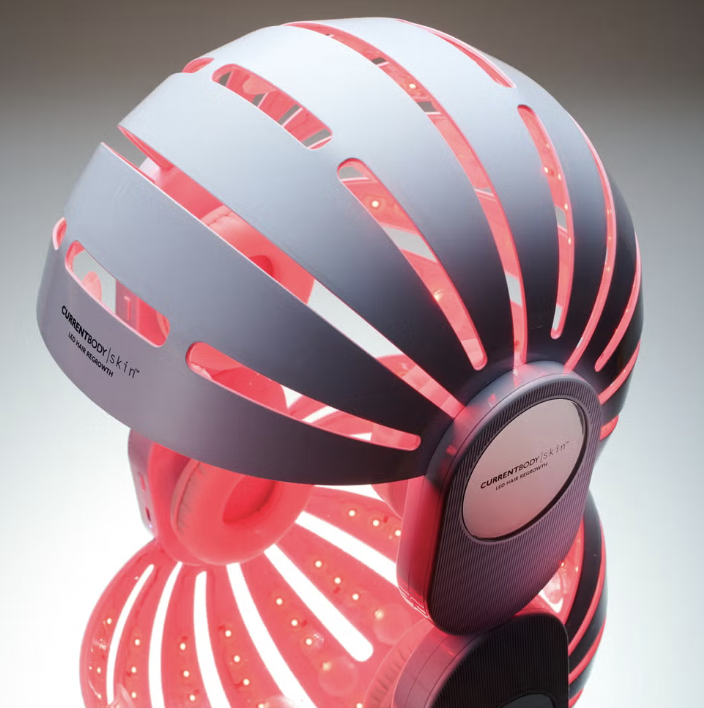

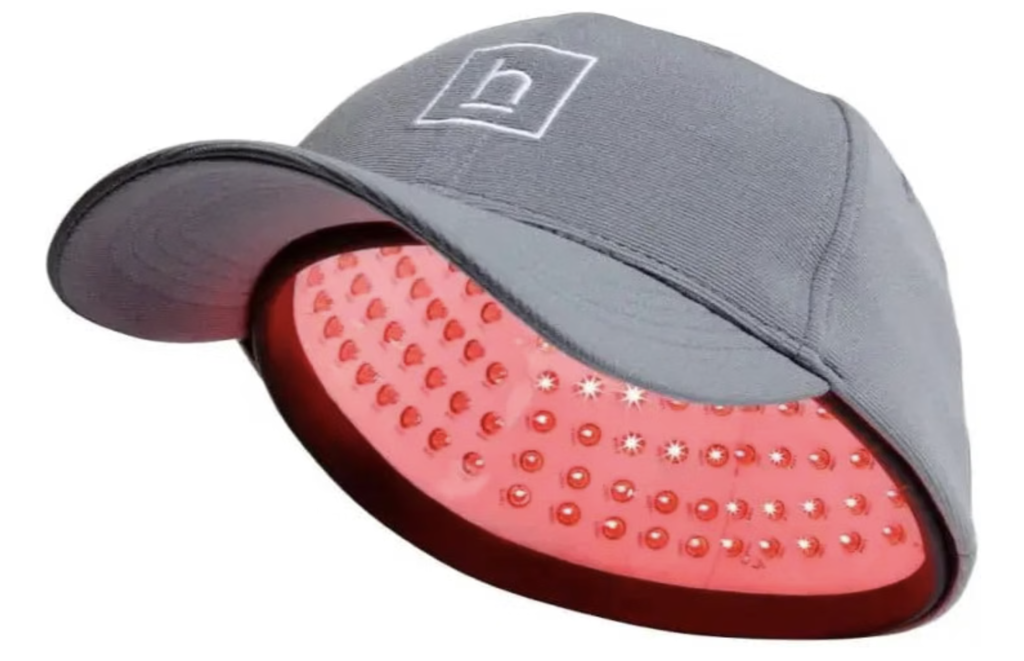
| Feature | CurrentBody Series 2 | Higher Dose Cap | HairMax PowerFlex Cap |
|---|---|---|---|
| Red light | 620-660 nm | 650 nm | 655 nm |
| Light Level | LED | LED | Low Level Laser |
| Design | Full Head Helmet | Baseball Cap | Baseball Cap |
| Treatment Time | 10 mins | 10 mins | 7 mins |
| Recommended frequency | Daily | Daily | 3 Times A Week |
| Under-eye cooling | No | Yes | No |
| Treatment time | 10 minutes | 6–8 minutes | 10–15 minutes |
| Price range | £649 | £764 | £1,899 |
| Best for | Full-scalp coverage and ease of use most affordable | Convenience and everyday wear | Less frequent treatments |
| Where to buy | SHOP NOW | SHOP NOW | SHOP NOW |
Whereas the panel becomes a much more versatile, multi-use device.
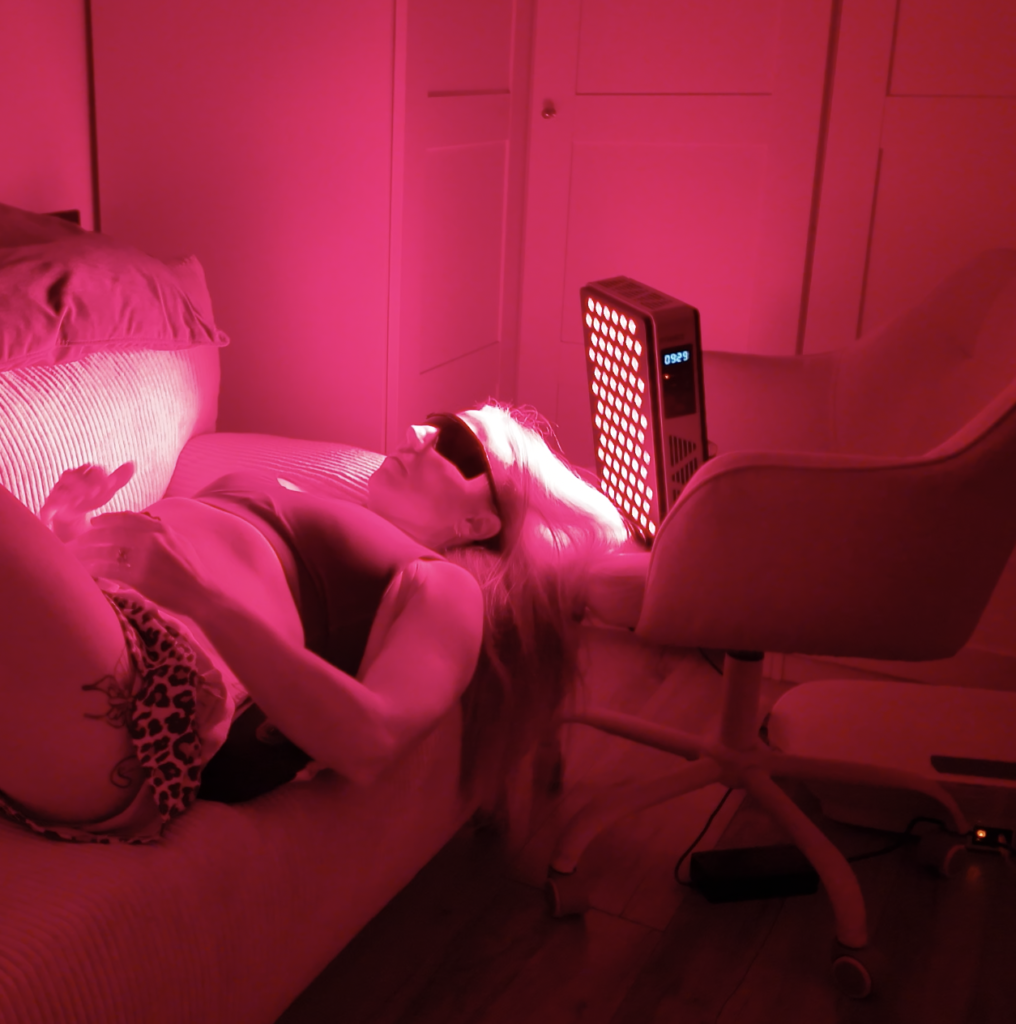
However, hair can block some of the light from reaching the scalp, so I wouldn’t necessarily assume that a panel will deliver the same results as a dedicated hair-growth device.
In terms of my own personal experience, I probably haven’t been consistent enough with specifically targeting my scalp to be able to tell you whether red light therapy has made a difference to my hair growth.
I’ve generally been using the panel whilst doing my stretching routines, and sometimes I’ll position my head towards the panel whilst reading my book.
But when it comes to hair growth, I still prioritise my regular scalp massage, using rosemary oil and making sure that I’m getting enough nutrients, protein and healthy fats in my diet.
And of course, that goes hand in hand with things such as stress management and making sure that you’re getting enough sleep.
All of these things are going to allow your body to function in the best way possible to support your hair health.
Red Light Therapy for Muscle Recovery and DOMS
Now this, for me, has been one of the biggest benefits of using red light therapy.
As someone who trains a lot, muscle recovery is something that I’m always paying attention to.
And once we hit perimenopause, there just seem to be so many more aches and pains going on.
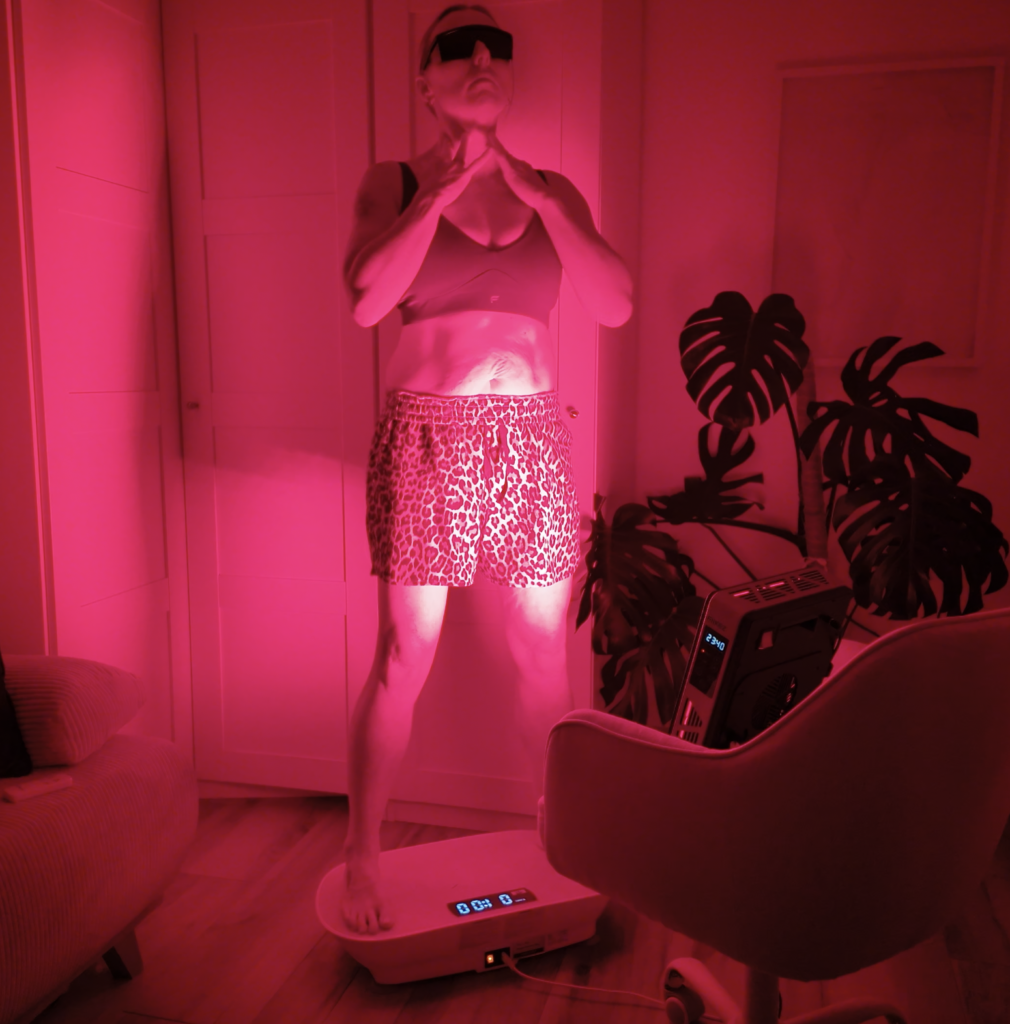
One of the biggest things I’ve noticed since using red light therapy is that my DOMS, or delayed onset muscle soreness, just doesn’t seem to be as intense.
I do have to caveat this by saying that I’ve been using my red light therapy alongside my vibration plate.
So it’s difficult to say whether it’s one or the other that’s making the biggest difference, but the combination of using both of these has been significant for me.
Related post: Vibration Plate Benefits – My Experience and Review
I’ve generally found that my muscles don’t seem to be quite as sore when I use these devices post-exercise as part of my recovery routine.
What Does the Science Say About Red Light Therapy for Muscle Recovery?
Again, this is an area where there is some promising human research.
Some studies have looked at reductions in muscle soreness and found a positive benefit, whilst others have looked at strength recovery and changes in markers associated with muscle damage.
There have also been studies looking at whether using photobiomodulation alongside a strength training programme can influence strength gains.
And this is where things get particularly interesting for me.
If you’re feeling better recovered between your training sessions, you’re potentially in a better position to go into your next workout and train with a little more intensity.
Over time, being able to train consistently and recover well is going to be an important part of making progress.
The research out there isn’t completely consistent, and it’s definitely an area where we need more studies.
But for me personally, I do feel that it has made a significant difference to how well recovered I feel between sessions.
Of course, I’m still prioritising my protein intake. I’m still working on following a progressive strength training programme so that I’m training effectively.
Related post: My Experience Following the Dr Stacy Sims Strength Training Programme
But all of these things go hand in hand.
When I’ve given myself a pretty stringent training programme to follow, I’ve had the energy and ability to recover between sessions without constantly feeling like my body is completely breaking down.
And at our age, I sometimes feel like that can happen quite often!
Red light therapy has become a recovery tool that I’ve definitely noticed a difference with, and it’s something that I will continue to use.
Red Light Therapy for Joint Pain, Aches and Lower Back Pain
Keeping with the theme of muscles, joints, aches and pains, this is another area where I’ve really felt a benefit.
I’m not talking about serious injuries here. I’m talking about those everyday aches and pains.
There’ll be the odd time when I’ve done an upper-body session and then perhaps slept funny, and I wake up the next day with a crick in my neck.
I’ve sat for around 10 minutes with the red light positioned towards my neck, and by the following day, the discomfort has almost completely disappeared.
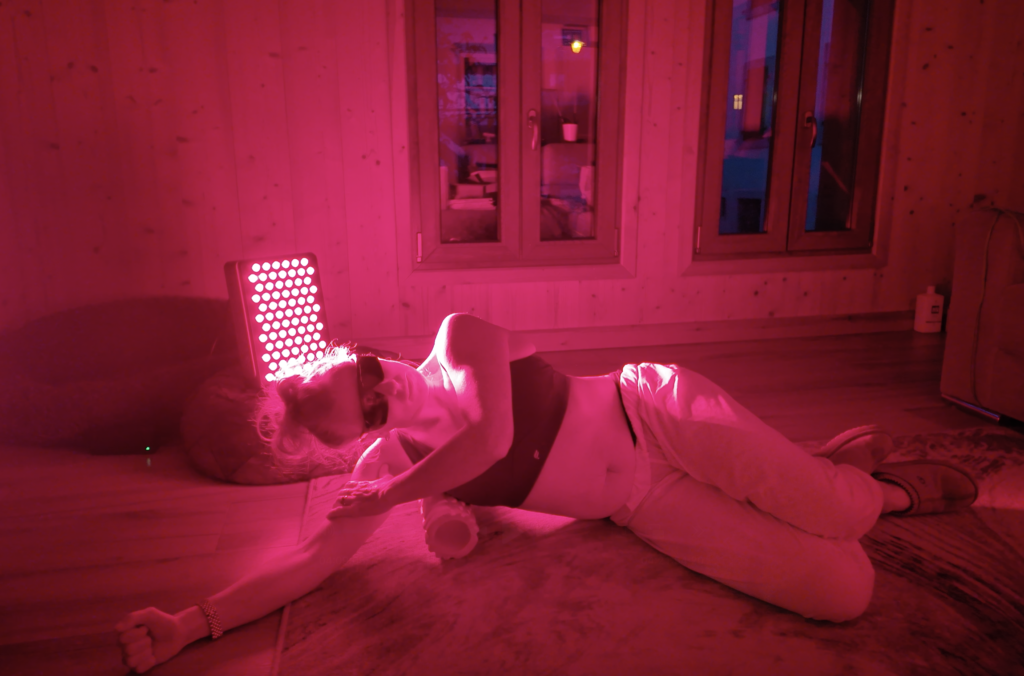
Now, of course, that’s anecdotal evidence.
I can’t prove that it was the red light therapy that made the difference, and some of that discomfort may well have settled on its own.
But I genuinely feel like those little aches and pains settle more quickly when I use it.
The warmth from my panel also feels really nice when it’s positioned towards an area that’s feeling stiff or uncomfortable.
There have been human studies looking at photobiomodulation for conditions such as chronic neck pain and knee osteoarthritis, with some finding improvements in pain scores.
So whilst I can’t prove that it’s the red light therapy that’s helped with my own aches and pains, there is some research to suggest that it may be helpful in certain situations.
My Experience With the FliKEZE Lumbar Neo Back
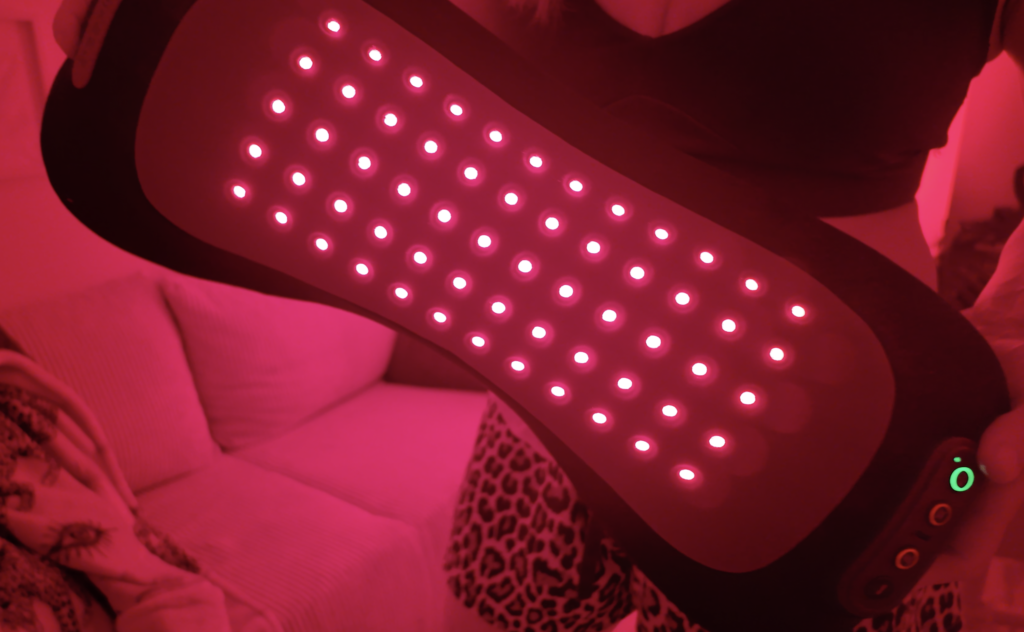
I do also experience lower back pain, and this is where the FliKEZE Lumbar Neo Back has really come into its own.
This is a red light therapy device designed specifically to be positioned around your lower back, and I absolutely love how convenient it is to use.
Whether I’m lying down reading my book or positioning it against the back of my chair on a day when my back is feeling particularly uncomfortable, it’s really easy to incorporate into my day.
I’ve found that combining this with my regular mobility work has made a significant difference to how my lower back feels.
And I think it’s important to emphasise that I’m still doing the mobility work.
I’m not expecting a red light therapy device to fix my back pain.
I’m still strength training, working on my mobility and doing all of the things that I know are important for keeping my body moving well.
But as an additional tool to help manage that discomfort, I’ve been really enjoying using it.
If you’re experiencing persistent or worsening back pain, it’s always worth getting it properly assessed rather than relying on a device to manage the symptoms.
Use code EMMA to get 10% Off
Can Red Light Therapy Improve Sleep?
This is another potential benefit that I think will be particularly interesting to many of my midlife women.
I know I’m often banging on about the importance of getting good sleep at a time in our lives when sleep seems to evade us.
So if red light therapy can help us to sleep better during perimenopause and menopause, then hell yes, that’s something I’m going to be interested in.
There are a few studies looking at red light therapy and sleep, although there aren’t a huge number of them just yet.
One small study looked at 20 female basketball players who used red light therapy for 30 minutes every evening over two weeks.
The researchers found improvements in reported sleep quality, along with increased melatonin levels.
Melatonin is the hormone that we naturally produce to help regulate our sleep-wake cycle.
It’s an interesting finding, although we do need to keep in mind that this was a very small study, and it doesn’t necessarily mean that we’ll all experience the same results.
Red Light, Blue Light and Your Circadian Rhythm
Another interesting aspect of this is the impact that different types of light have on our natural circadian rhythm.
We know that exposure to bright, blue-rich light in the evening can interfere with our body’s natural production of melatonin.
Switching off those bright overhead lights, getting away from our screens and using dimmer, warmer lighting in the evening may help create an environment that’s more conducive to sleep.
Although using dim red lighting in the evening isn’t quite the same thing as using a powerful red light therapy panel.
I’ve recently started using some blue light blocking glasses, specifically the ones designed for evening use, which have those red-tinted lenses.
On the evenings when I do remember to wear them, I do feel like I’ve been sleeping better.
I need to get back to consistently tracking my sleep on my Ultrahuman Ring so that I can look at whether there are any noticeable changes in my sleep data.
Related post: My Ultrahuman Ring Air Review
Shop my blue light blocking glasses
There are also some evenings when I’ve done some gentle vibration plate work, used my red light therapy and done some breathwork.
And I do find that the combination of all of these things leads to me feeling more relaxed and sleeping better.
Again, it’s difficult to make that distinction and say that red light therapy is the thing that’s fixing my sleep.
I think it’s got to be a combination of different things.
Having some downtime, making sure that we’re not overstimulated in the evening and getting off our screens are all really important.
I wouldn’t necessarily invest in a red light therapy panel purely to improve your sleep, but if you already have one, it’s certainly something interesting to explore as part of your wider wellness routine.
Red Light Therapy and Vibration Plates for Energy and Wellbeing
One of the things I’ve really enjoyed over the last year is combining my red light therapy with my vibration plate.
I’ve spoken before about the benefits I’ve experienced from regularly using a vibration plate, and combining the two has become one of my favourite little wellness rituals.
Whether I’m using them first thing in the morning or when I’m experiencing a little afternoon energy dip, I just feel better afterwards.
I feel more awake, more energised and generally a little more ready to get on with my day.
Now, whether that’s coming from the red light, the vibration plate, the fact that I’ve stepped away from my desk and moved my body, or a combination of all of those things, I really couldn’t tell you.
There isn’t strong evidence to suggest that using a red light panel will reliably give you an immediate energy boost.
But for me, it’s become a feel-good ritual that I genuinely enjoy doing.
And I think sometimes we underestimate the value of taking 10 minutes out of our day to do something that makes us feel good.
Read more: My Vibration Plate Review and the Benefits I’ve Experienced
Red Light vs Near-Infrared vs Far-Infrared: What’s the Difference?
Before you invest in a red light therapy device, I do think it’s important to understand the difference between red light, near-infrared and far-infrared.
Because they don’t all do the same thing.
And you want to make sure that you’re investing in a device that’s appropriate for the benefits you’re hoping to experience.
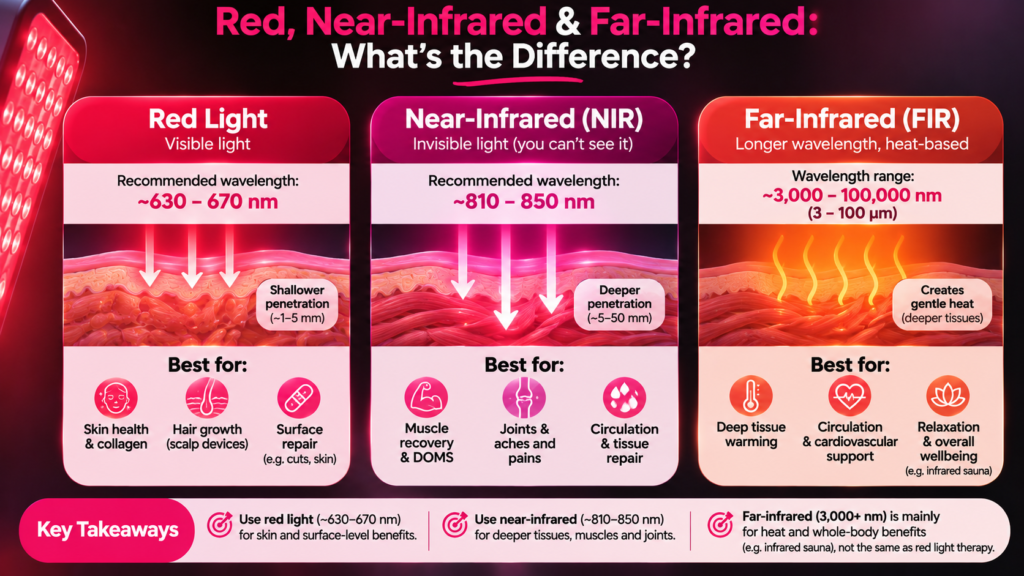
Red Light
Red light is the light that you can actually see.
The wavelengths commonly used in red light therapy for skin health are around 630 to 670 nanometres (nm).
Red light tends to be used more for superficial tissues, which is why you’ll commonly see these wavelengths in red light face masks and hair-growth devices.
Potential applications include:
- Supporting skin health and collagen production.
- Improving the appearance of fine lines and wrinkles.
- Supporting hair growth in certain types of hair loss.
Near-Infrared Light (NIR)
Near-infrared light has a longer wavelength, and you can’t actually see it.
Commonly studied wavelengths include 810 to 850 nanometres (nm), although other wavelengths are also used in research.
Near-infrared light can generally penetrate further into tissue than visible red light, which is why it’s particularly interesting when it comes to muscles, joints and recovery.
Potential applications include:
- Supporting muscle recovery.
- Helping to manage certain types of muscle and joint pain.
- Influencing processes involved in tissue repair.
Deeper penetration doesn’t automatically mean you’re going to get a better result, though. The amount of light reaching the target tissue and the overall treatment dose also matter.
Far-Infrared Light (FIR)
Far-infrared is different again.
It uses much longer wavelengths and is what you’ll commonly see associated with infrared saunas and heating devices.
Far-infrared therapy is much more closely associated with heat and warming the body.
Potential applications include:
- Relaxation.
- Warming the body.
- Heat-related changes in circulation.
- Temporary relief from muscle stiffness.
An infrared sauna and a red light therapy panel aren’t interchangeable, even though both may have potential wellness benefits.
Red Light vs Near-Infrared vs Far-Infrared Comparison
| Type of Light | Wavelength Guide | Common Applications |
|---|---|---|
| Red light | 630–670 nm commonly studied | Skin, collagen and hair growth |
| Near-infrared | 810–850 nm commonly studied | Muscle recovery, joints and pain |
| Far-infrared | Much longer wavelengths, measured in micrometres | Heat, relaxation and warming the body |
If, like me, you’re interested in both skin health and muscle recovery, then a panel that combines red and near-infrared wavelengths may be a more versatile option.
How to Choose the Best Red Light Therapy Device
One of the first things I would look at when buying a red light therapy device is the wavelength.
There are a lot of cheap devices out there, and they’re not all created equally.
Just because something is emitting a red light doesn’t necessarily mean that it’s going to have the same effect as the devices being used in clinical studies.
I’d look for a manufacturer that clearly provides information about:
- The wavelengths used in the device.
- The power output or irradiance.
- The distance from the device at which that output is measured.
- Recommended treatment times and distances.
- Safety instructions and eye-protection requirements.
- Whether the device is designed for the area you’re wanting to treat.
It doesn’t necessarily mean that buying the most expensive device is going to get you the best results.
But I would be wary of buying a really cheap, unbranded device that doesn’t provide any meaningful information about the light it’s delivering.
My FliKEZE SpectraPanel Red Light Therapy Review
The red light panel I’ve been using over the last year is the FliKEZE SpectraPanel.
This was gifted to me, and it’s the only full red light panel that I’ve personally got experience with, so I can’t compare it to every other brand on the market.
However, there are a number of things that I really like about it.
The FliKEZE SpectraPanel combines:
- 660 nm red light.
- 850 nm near-infrared light.
- Three light modes, allowing you to use red light, near-infrared or a combination of both.
- Five adjustable intensity settings.
- An adjustable stand that allows you to position the panel towards different areas of your body.
I like that I can adjust the power output rather than having to use it at maximum intensity all the time.
I can also angle and move the panel around so that it’s positioned towards the area that I want to focus on.
Use Code EMMA To Get 10% Off
Red Light Therapy Panel vs Face Mask: Which Is Better?
The main reason I wanted a red light panel rather than a face mask is simply because I’m not restricted to using it on one area of my body.
If you buy a mask, you can only use it on your face.
If you buy a hair-growth cap, you can only use it on your head.
Whereas with the panel, I can position it towards my face, legs, back, shoulders or wherever I’m wanting to focus on.
Of course, with that comes the downside that you’ve generally got to be positioned in one place whilst using it.
If you’ve got a wearable red light face mask, you can potentially get up, walk about and go about your daily business, provided the manufacturer’s instructions allow it.
But for me personally, I really want to use red light therapy as a wellness tool.
I want to use it as almost a ritual that forces me to slow down, switch off and do something for myself.
So having to stay in one place for a few minutes isn’t necessarily a negative for me.
I also feel that I’m getting much more use out of the panel because it’s so versatile.
How Long Should You Use Red Light Therapy?
This is probably one of the most common questions when it comes to red light therapy.
And unfortunately, there isn’t one specific treatment time that’s going to work for everyone.
The amount of light that you’re receiving is going to depend on the power output of your device, how far away you are from it and how long you’re exposed to the light.
A more powerful device might deliver a particular dose of light in just a few minutes, whereas a less powerful device might take longer.
This is why it’s always important to follow the manufacturer’s instructions.
I personally like to use my red light panel for around 10 minutes at a time.
If I can do a session in the morning and another in the evening, that’s generally what I enjoy doing, although I certainly don’t manage to do that every single day.
That’s my personal routine rather than a recommendation that everyone should follow, as the appropriate treatment time and frequency will depend on your particular device.
Can You Use Too Much Red Light Therapy?
One thing that’s important to understand is that more red light therapy doesn’t necessarily mean better results.
Researchers talk about something called a biphasic dose response.
Essentially, too little light might not have much of an effect, an appropriate amount may produce a beneficial response, and too much light may actually reduce that benefit.
So sitting in front of your red light panel for an hour isn’t necessarily going to give you six times the benefit of sitting in front of it for 10 minutes.
This is another reason why I’d recommend following the instructions for your particular device rather than just assuming that more is better.
You should also follow the manufacturer’s safety guidance, particularly when it comes to protecting your eyes.
Near-infrared light is invisible, but that doesn’t mean it’s automatically safe to look directly into the LEDs.
If you have a condition or take medication that makes you sensitive to light, or you’re considering using red light therapy for a medical condition, speak to a healthcare professional first.
How Often Should You Use Red Light Therapy?
It doesn’t necessarily have to be an everyday thing.
Some studies have shown benefits from using red light therapy two to three times per week, whilst others have used more frequent treatments.
Again, it’s going to depend on the device, the dose and what you’re actually wanting to achieve.
But I think the most important thing, as with any health or wellness habit, is being consistent with it.
Using a red light panel once and then leaving it sitting in the corner of your bedroom for the next six months probably isn’t going to do a great deal for you.
And if you’re someone who tends to buy these things and then never actually uses them, please save your money.
Focus on having good nutrition, drinking enough water, moving your body regularly and making sure that you’re getting enough nutrients in your diet.
If, however, you’re someone who enjoys having those little self-care moments and wants to add something into your existing wellness routine, then this might be something that you really enjoy using.
How I Incorporate Red Light Therapy Into My Wellness Routine
I still have to be quite intentional about using my red light therapy.
In fact, at the time of writing this, I’ve got out of the habit of using it quite as regularly as I would like.
Which is one of the reasons I’m quite glad that I’ve done this review, because it’s reminded me of all the benefits and how good I actually feel when I do these practices consistently.
Here are some of my favourite ways to incorporate red light therapy into my routine.
My 10-Minute Morning Wellness Ritual
I’m trying to get into the habit of getting up in the morning and avoiding immediately scrolling on my phone.
Instead, I’ll come downstairs and stand on my vibration plate with my red light panel switched on.
I’ll spend around 10 minutes doing some gentle movement, breathwork and lymphatic drainage exercises.
I’ll generally spend around five minutes facing the panel and five minutes with my back towards it, within the recommended usage guidance for my device.
It’s such a lovely way to start the day, and I genuinely feel better when I do it consistently.
Red Light Therapy After Strength Training
If I’ve had a particularly tough training session, I’ll sometimes use the panel later in the day as part of my recovery routine.
I’ll focus on the areas that I’ve been training or the areas where I’m experiencing a little more muscle soreness.
This is probably where I’ve personally noticed the biggest benefit from using red light therapy.
Red Light Therapy on Recovery Days
Another way that I really like to use my red light panel is on a recovery day when I’m not doing a strength training session.
I might be doing some stretching, foam rolling or gentle mobility work in front of the panel, keeping within the recommended treatment distance and time.
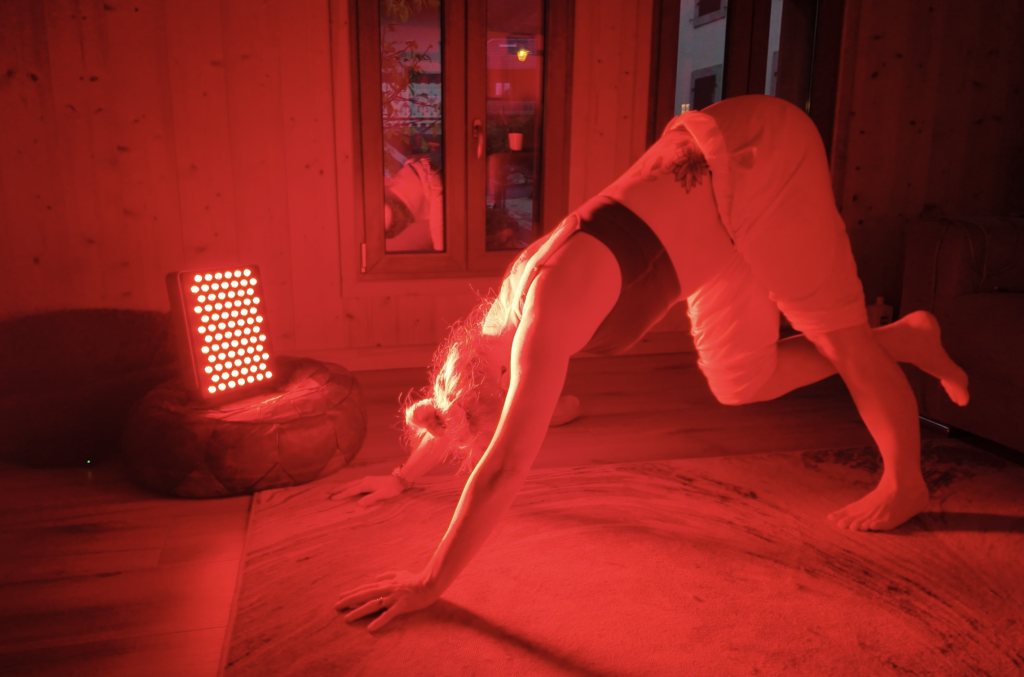
You could also incorporate it into a gentle yoga or meditation practice.
Again, it’s just a really nurturing, wonderful self-care practice.
Red Light Therapy as Part of My Evening Routine
If I remember, I’ll sometimes use my red light therapy in the evening, particularly if I’ve been training hard.
I’ll also use my Lumbar Neo Back whilst I’m reading my book or having a little downtime.
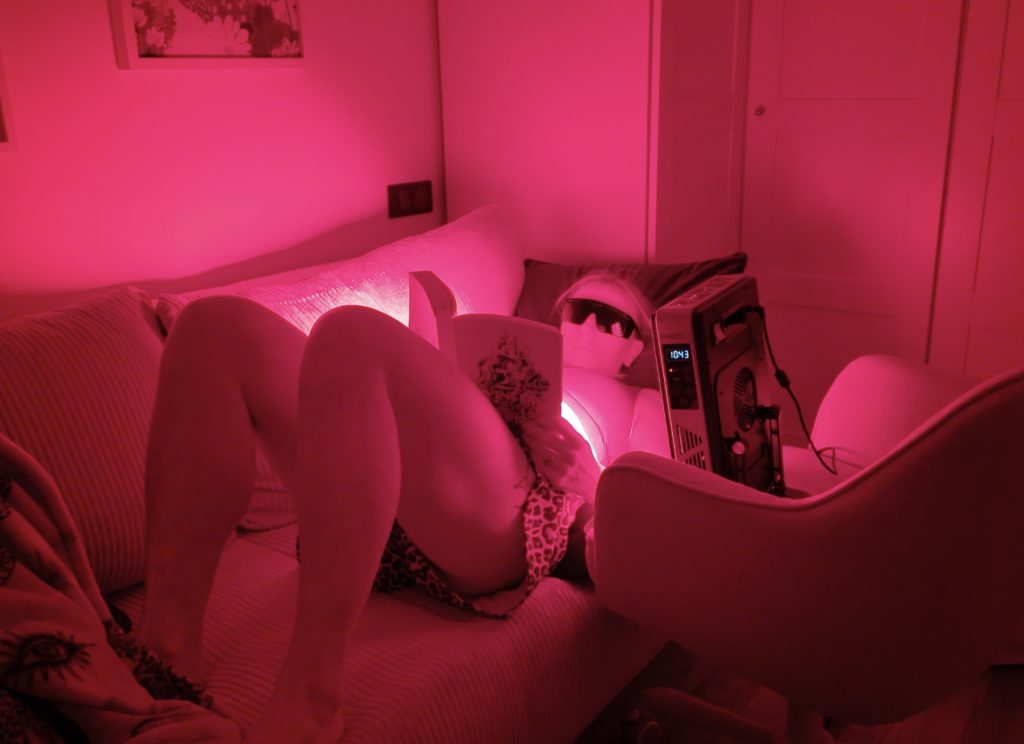
Combined with some breathwork, gentle movement and getting away from my screens, it’s a really nice way to wind down at the end of the day.
We don’t yet know whether evening use is the optimal timing for sleep benefits, but for me, it’s more about creating that opportunity to slow down.
The key is not to overcomplicate it.
Look at it as a self-care practice that you can realistically incorporate into your week.
Because if it takes up too much of your time or feels like another chore that you’ve got to tick off your list, you’re probably not going to do it.
Is Red Light Therapy Worth It? My Verdict After 12 Months
Breaking all of this down, whether red light therapy is worth it is going to be very subjective.
Do you have the disposable income to invest in something that might give you relatively subtle benefits, particularly when it comes to your skin and hair?
And are you actually going to use it consistently enough to potentially experience those benefits?
I do feel that my skin looks bright and clear, and I very rarely get blemishes these days.
But that has to go hand in hand with all of the other wellness elements that I’ve been working on.
I haven’t noticed any dramatic changes to my face, and I certainly haven’t noticed a significant difference to the bags underneath my eyes.
However, I’ll continue using red light therapy as part of my approach to supporting my skin health as I age.
For me personally, the biggest impact has been on recovery and managing those everyday aches and pains.
I’ve noticed enough of a difference that, as a health and fitness enthusiast who wants to train hard and continue to hit my health and fitness goals, it’s become a really valuable tool for me.
I feel better recovered and more prepared for my next training session.
And as I mentioned earlier, I just love it as that little moment of self-care.
When used hand in hand with my vibration plate, it’s a feel-good ritual that I love to do a few times a week.
My Red Light Therapy Results at a Glance
| Potential Benefit | What the Research Suggests | My Personal Experience |
|---|---|---|
| Skin and wrinkles | Encouraging human research | No dramatic visible changes |
| Collagen production | Some supportive human evidence | Difficult to measure |
| Eye bags and dark circles | Limited specific evidence | No noticeable difference |
| Hair growth | Encouraging evidence for pattern hair loss | Haven’t targeted my scalp consistently enough |
| Muscle recovery and DOMS | Promising, although results vary | One of my biggest benefits |
| Aches and pains | Evidence for certain musculoskeletal conditions | Noticeable improvements |
| Lower back discomfort | Mixed evidence depending on the treatment | Really enjoying it alongside mobility work |
| Sleep | Early, encouraging research | Sleeping better alongside other wellness practices |
| Energy | Limited direct evidence | Feel more energised when combined with my vibration plate |
Do You Actually Need Red Light Therapy?
Absolutely not.
Red light therapy is definitely in that nice-to-have rather than need-to-have category.
It’s not going to replace your strength training.
It’s not going to replace regular exercise.
It’s not going to replace good nutrition, getting enough sleep or all of those basic health habits that we know make a significant difference.
However, if you have the disposable income and the desire to add something to your overall wellbeing routine, then I do think it’s worth considering.
It could also make a really lovely gift for someone who enjoys their wellness practices and is likely to use it regularly.
As a recovery tool, particularly if you’re someone who trains regularly or struggles with those everyday aches and pains, I personally feel that it’s been a worthwhile addition to my routine.
The science is showing some promising benefits, but we do need to manage our expectations and keep things realistic.
The changes might be subtle.
But as a tool that’s helping me to feel better, recover more comfortably and enjoy those little moments of self-care, it’s something that I’ll continue to use.
And ultimately, anything that helps me continue to strive towards feeling my best in midlife is something that I’m interested in.
Shop the red light therapy devices I’ve been using:
Use my discount code EMMA to save 10%
Frequently Asked Questions About Red Light Therapy
What is red light therapy good for?
Some of the better-researched applications of red light therapy include improving certain signs of skin ageing, supporting hair growth in people with pattern hair loss, helping with muscle recovery and managing certain types of musculoskeletal pain. There is also some early research looking at sleep, although more studies are needed.
What is the best wavelength for red light therapy?
It depends on what you’re wanting to achieve. Wavelengths around 630–670 nm are commonly studied for skin-related applications, whilst near-infrared wavelengths around 810–850 nm are commonly used in research involving muscles and deeper tissues. These aren’t the only potentially effective wavelengths, and the treatment dose is also important.
Is 10 minutes of red light therapy enough?
For some devices and applications, 10 minutes may be sufficient. However, treatment times depend on the irradiance, distance from the device and intended application. Always follow the recommendations for your particular device.
Can you use red light therapy every day?
Some devices and treatment protocols are designed for daily use, whilst others recommend using them several times per week. More frequent use isn’t necessarily going to give you better results, so follow the manufacturer’s guidance.
How long does it take to see results from red light therapy?
This depends on what you’re using it for. Some people may notice changes in discomfort or recovery relatively quickly, whereas changes in skin appearance and hair density typically require consistent use over weeks or months. Results aren’t guaranteed.
Is a red light therapy panel better than a face mask?
Not necessarily, but a panel is generally more versatile because it can be positioned towards different areas of the body. A face mask may be more convenient if skin health is your main priority. The quality of the device, treatment dose and how consistently you’re likely to use it are more important than simply choosing one format over the other.
Does red light therapy help women over 40?
Red light therapy may be a useful additional tool for women over 40 who are interested in supporting their skin health, hair growth, muscle recovery and managing everyday aches and pains. However, it isn’t a proven treatment for menopause itself or a replacement for the foundations of good health.
Have you tried red light therapy?
I’d love to know what you’ve actually noticed from using it. Whether that’s improvements in your skin, hair growth, recovery, sleep or just generally feeling a little better.
Let me know in the comments below.
And if you’re interested in more of my reviews of health, fitness and wellness products, make sure you’re subscribed to my YouTube channel, where I’m always testing things out to help you make more informed buying decisions.

Leave a Reply