You can keep on reading or see the video version below.
AFFILIATE DISCLAIMER: Some of the links in this description may be affiliate links, which means I may earn a small commission if you choose to purchase through them, at no extra cost to you. I only share products, services or providers that I personally use, trust, or genuinely believe may be helpful. Please always do your own research and make the decision that is right for you.
Even though I work in health and fitness and I know the principles that support fat loss and better health, I was still finding it incredibly difficult to maintain my weight. I struggled with food noise. I struggled with eating as a form of procrastination. I struggled with hunger and cravings that felt far stronger than they should have done. On top of that, I was navigating midlife, PCOS and what I strongly believe was a level of insulin resistance that made sticking to a calorie deficit feel so much harder than it should have done.
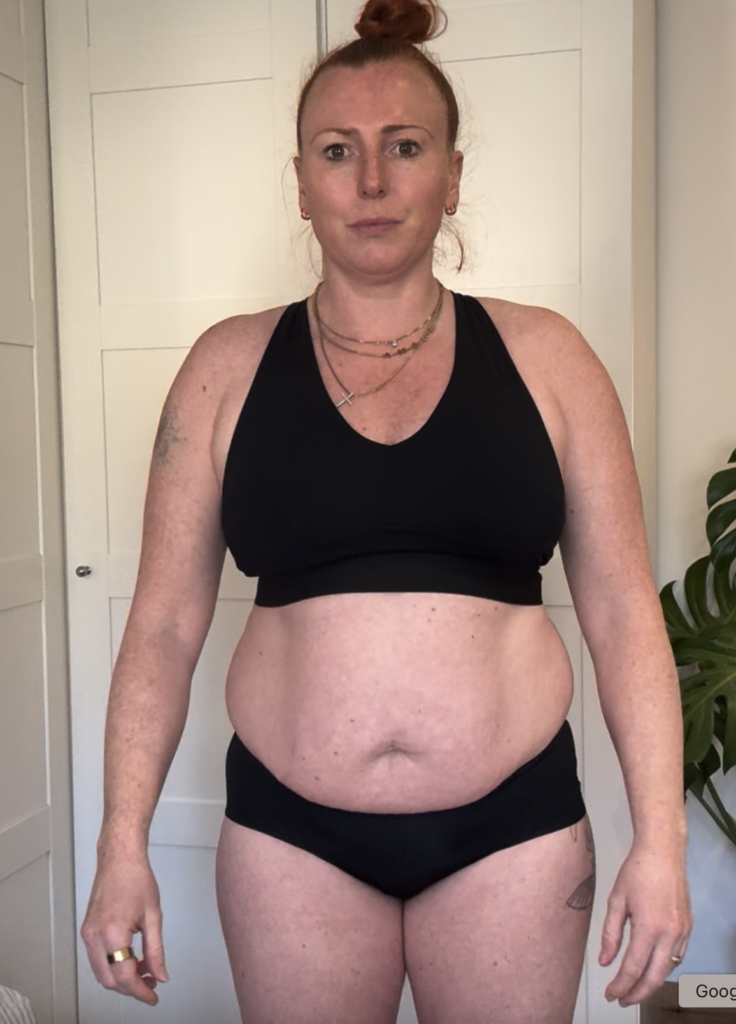
I’d got to a point where I knew I wasn’t in a healthy place. My BMI was in an unhealthy range, my waist-to-hip ratio was too high, my blood pressure was starting to creep up, my bloating was awful and my energy levels were on the floor. I didn’t hate the way I looked, but I definitely didn’t feel good in my body and I didn’t feel like myself. That was really the catalyst for me deciding to do something about it.
Why I decided to use Mounjaro
I know GLP-1 medications can be controversial. There is still a lot of stigma around them, and I completely understand why some people feel sceptical because, like any tool, they can be misused. That was actually one of the reasons I was quite sceptical myself in the beginning.
But for me, this was never about chasing skinny. It was never about trying to become as small as possible. It was about health. It was about getting myself back into a healthier range and feeling like my body was actually functioning properly again.
I wanted to improve the markers that were telling me something wasn’t right:
- My BMI had crept into the obese range
- My waist-to-hip ratio was in an unhealthy place
- My blood pressure was rising
- My energy was awful
- My bloating was severe
- My hunger levels felt completely out of control
- My PCOS symptoms and insulin resistance were making fat loss feel like an uphill battle
So after a lot of contemplation, I decided to use Mounjaro as a tool to support me, and I’ve been documenting the journey in case it helps anyone else who is considering it too.
Disclaimer!!! – As always, this is not medical advice. I’m simply sharing my own experience, and if you’re thinking about going down this route, please do your own research and speak to a qualified medical professional.
A quick recap of my Mounjaro journey so far
One thing I was really intentional about from the beginning was trying to stay on the lowest dose possible while still getting results. I still think that’s one of the best ways to approach it where possible, because I do think one of the issues can be people increasing their dose too quickly.
From the start, my goal has always been to eventually come off the medication, not to assume I would be on a high dose forever. So with that in mind, here’s how the first five months have looked.
Month 1
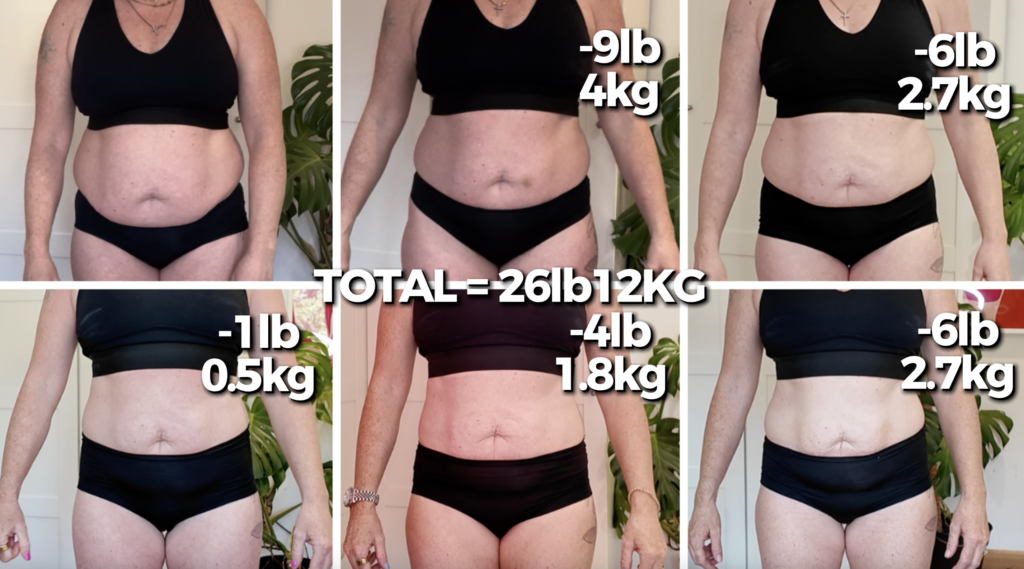
I lost 9lbs in the first month on 2.5mg of Mounjaro.
Month 2
I lost another 6lbs and stayed on 2.5mg.
Month 3
I only lost 1lb, still on 2.5mg, but this was a month where I was out of my normal routines and travelling more. Even though the scale didn’t move much, I still saw changes in my waist circumference, which reminded me that progress isn’t always reflected by scale weight alone.
Month 4
I increased my dose, but I did it in a way that felt more gradual. Rather than taking a single 5mg dose, I took 2.5mg twice per week to try to reduce the side effects that can happen when you increase too quickly. In that month I lost 4lbs.
Month 5
This month I stayed with the same approach of 2.5mg twice per week, and I lost another 6lbs.
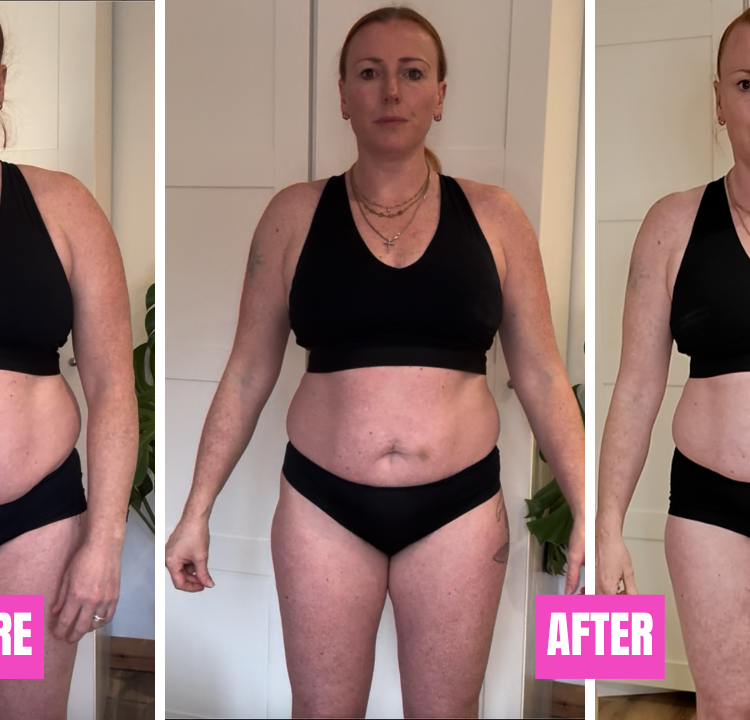
And that brings me to now. Five months in, I’ve hit my target weight.
Hitting my goal weight feels huge
I’m absolutely thrilled to be able to say that. Not because I think a number on the scale defines anything, but because I know what it took for me to get here and because I know how different I feel compared to where I started.
When I started this journey, I was living in a body that just didn’t feel like me. I’m active. I train. I work in health and fitness. But I still felt like I was moving around in a body that didn’t reflect how I lived or how I wanted to feel. I didn’t feel like I was functioning as my best self. I didn’t feel like I had access to my best energy, my best fitness or my best quality of life.
Now, five months on, that has changed dramatically.
The biggest change? My energy
One of the biggest shifts for me over the last few weeks in particular has been my energy levels.
Previously, I would get to about 3pm and feel absolutely done. I’d have no energy left to do anything productive, whether that was work, life admin, house jobs or even just basic tasks that needed doing. I used to feel guilty about it, like I was being lazy, but the reality is I just didn’t have the energy.
Now I genuinely feel like I’ve got my capacity back.
The other evening I saw a pile of washing that needed putting away and I just did it. I know that sounds so small, but if you know, you know. I would normally look at something like that and feel like I simply didn’t have the mental or physical energy to deal with it. This time I still had enough in the tank to get it done.
That has been one of the most transformational parts of this whole experience for me. I’m feeling more focused, more productive and more capable than I have done in a really long time.
I’m feeling fitter and stronger too
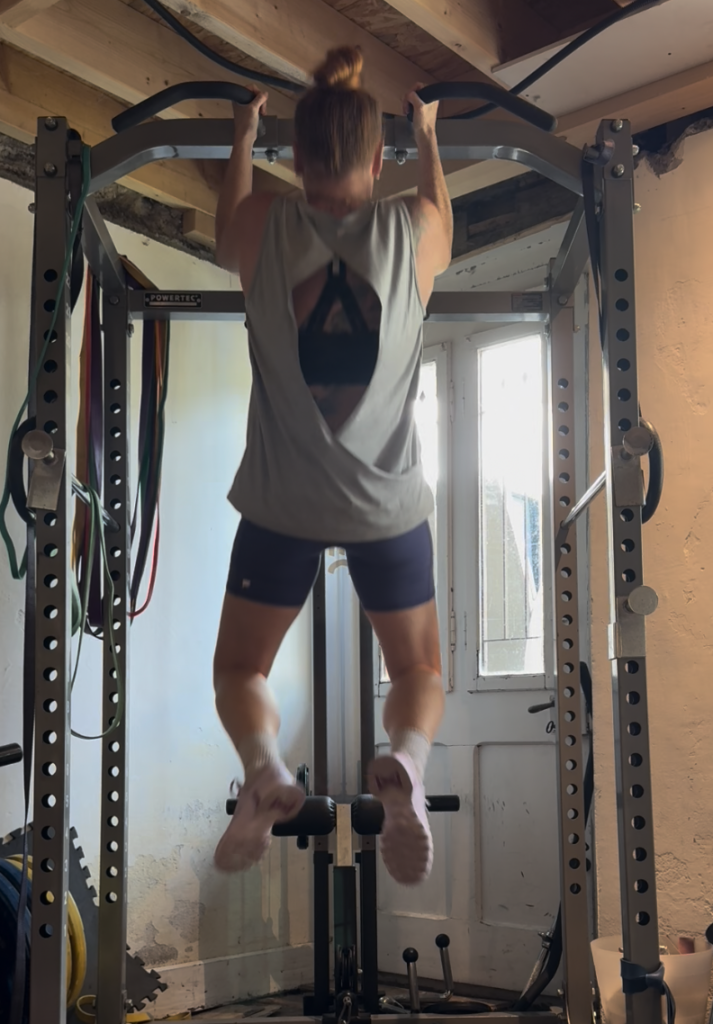
Alongside the weight loss, I’ve worked really hard to maintain my strength throughout this journey. That has been a non-negotiable for me.
I’ve continued with strength training and I’ve been following Stacy Sims’ Power Happens program alongside everything else. As a result, I’m not just lighter, I actually feel strong. I’ve noticed much more tone and definition in my body and I’m feeling fitter in the activities I do day to day.
That’s been really important to me because I didn’t want this to be a journey where I simply lost weight at the expense of muscle, strength and performance. I wanted to support my body properly through the process.

My health markers have improved massively
As much as I’m happy with the physical changes, what matters most to me is that I’ve genuinely improved my health.
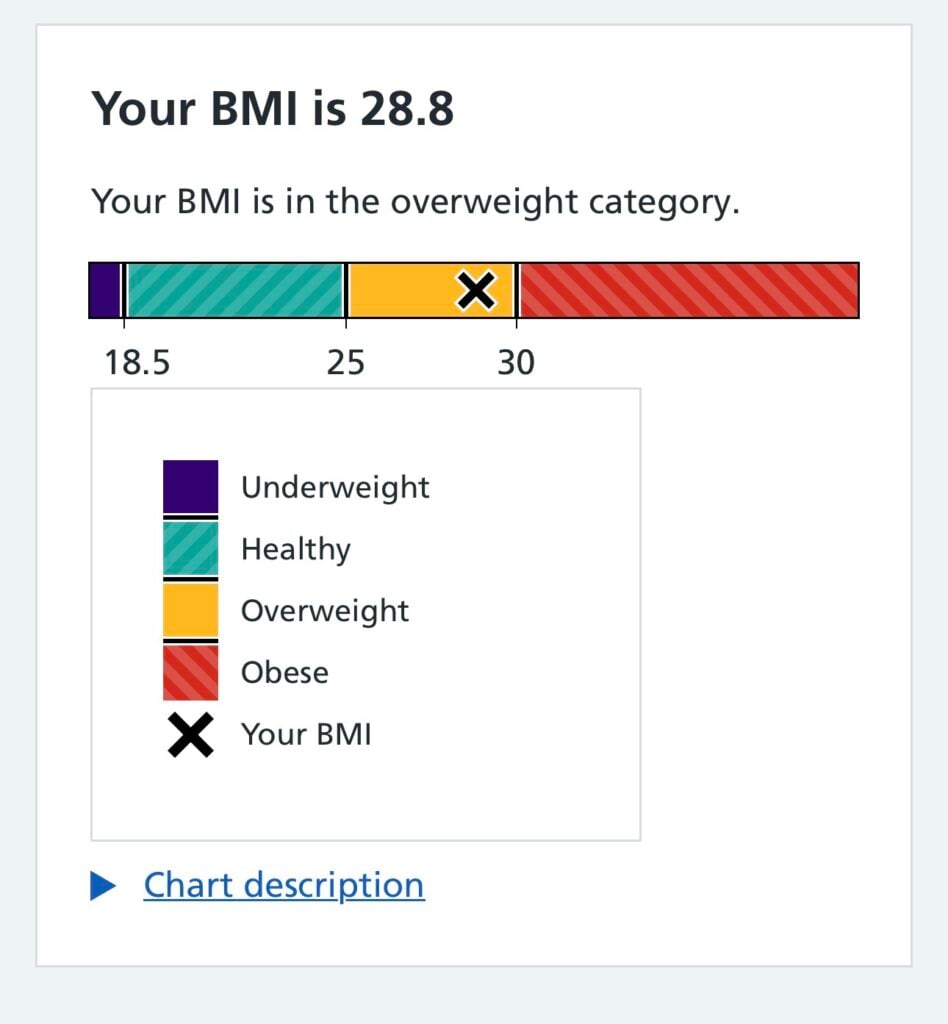
BMI isn’t a perfect measure, especially if you carry more muscle, but when I started I was borderline in the obese category. I’m now back in what’s considered a healthy range.
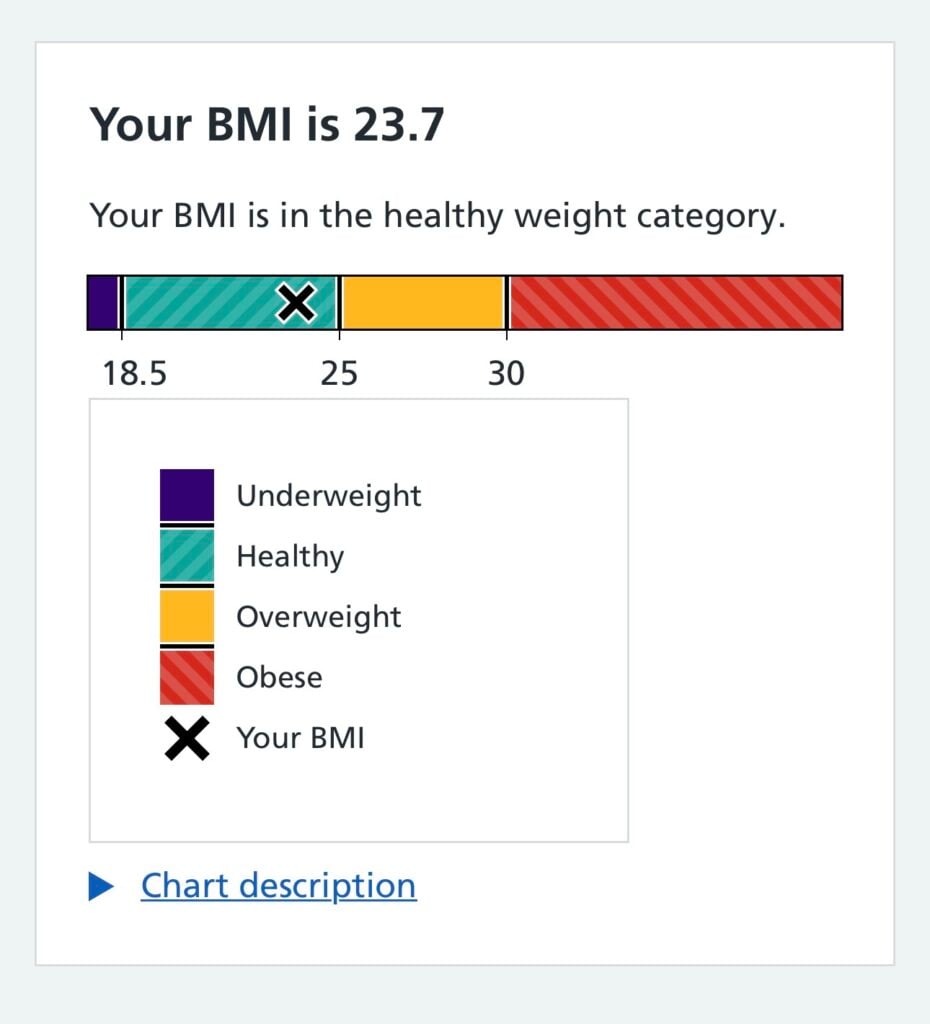
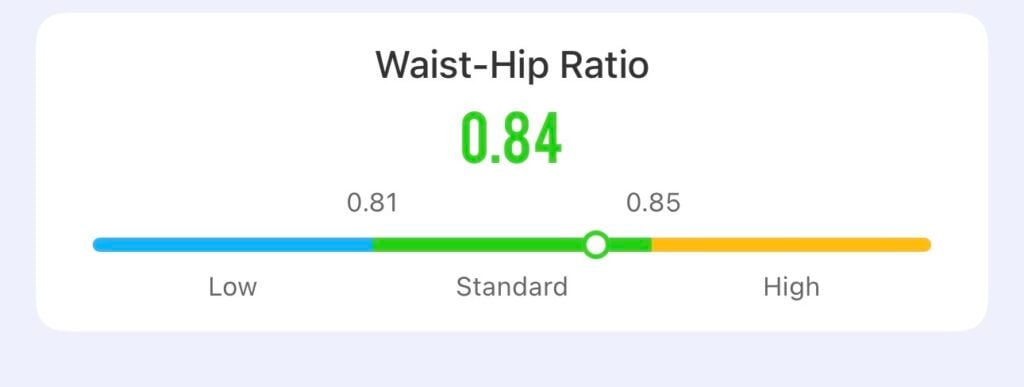
More importantly for me, my waist-to-hip ratio has improved too, and that matters because central weight gain and a higher waist-to-hip ratio are linked to increased risk of issues like heart disease and diabetes.
My blood pressure has come down too, which is another big one.
And beyond the data, I can feel the difference in the way my body is working. My hunger levels are no longer running the show in the same way they were before.
The freedom of finally having an “off switch”
Before Mounjaro, one of the biggest challenges for me was that I just didn’t seem to have a stop button when it came to food.
I know all the usual nutrition advice. I know about protein, fibre, balanced meals, calorie deficits and all the things that support fat loss. But knowing those things and being able to consistently implement them are not always the same thing when your hunger, cravings and food noise feel relentless.
That’s the part I think people often miss when they talk about GLP-1s as if they’re some kind of easy shortcut.
For me, this hasn’t been a magic fix. I still have to be intentional. I still have to make good choices. I still have to prioritise protein and structure my meals well. But what it has done is make that process feel manageable.
It’s allowed me to experience what I think a lot of people mean when they talk about intuitive eating.
I can now have a piece of chocolate or a slice of cake, enjoy it, have a few bites and genuinely feel done. I can stop. I can walk away. I never had that before.
The same has been true with alcohol. I enjoy having a drink. I love a Friday evening with friends and a couple of glasses of wine. But now I can have a couple of glasses and feel like that’s enough. I don’t have the same pull to keep going.
That has been huge for me.
This has never just been about weight loss
I know there will always be people who judge the use of GLP-1 medications. I’ve seen the comments, the criticism and the snide takes online from people saying it’s cheating or that it’s all about aesthetics.
For me, that just isn’t the reality of why I’ve done this.
This has been about improving my health, improving my quality of life and getting back to a place where I feel strong, fit, leaner and more like myself. Yes, of course I want to look better too. I don’t think there’s anything wrong with saying that. Most people who train, eat well and look after themselves do care how they look to some degree. That doesn’t mean vanity is the only reason.
I wanted to look and feel my best, and I don’t think those things have to be separated from health.
One of the biggest health wins: my cycle has started to return
This has probably been one of the most significant markers of all for me.
Over the last couple of months, my menstrual cycle has started to come back. It’s not fully regular and it’s not what I’d call completely established yet, but there has definitely been a shift.
For me, that feels like a huge signal that my body is moving in a healthier direction. It’s one of the clearest signs that something has improved under the surface, not just on the scales.
Why I think we need a more balanced conversation around GLP-1s
I really do think we need to move towards a more nuanced conversation around these medications.
Yes, they can be misused. Yes, there will always be people who use them purely for aesthetics. But that doesn’t mean they don’t also have a valid and important place in improving health.
For me, I see GLP-1s in a similar way to how I see something like HRT. They’re a tool. They’re not the whole answer, but they can be incredibly valuable when used in the right context, with the right support and for the right reasons.
If someone is overweight, struggling with insulin resistance, battling relentless hunger, seeing their health markers worsen and finding that the usual approaches aren’t enough, I don’t think we should demonise them for using a medically supported tool to help.
In fact, I think the more honest experiences people share, the better.
Where I think the future of GLP-1s is heading
I honestly think peptides and GLP-1 medications are only at the beginning of where they’re going.
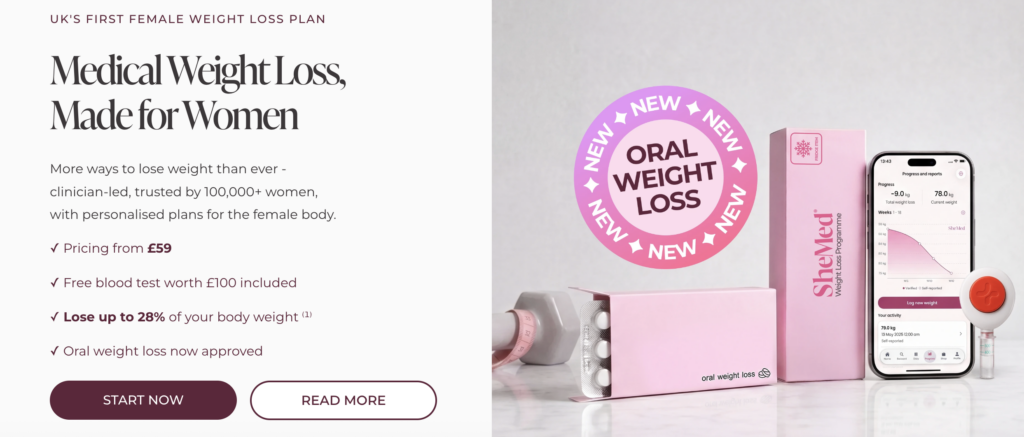
We’re already seeing research looking at benefits beyond weight loss and metabolic health, including potential benefits for things like brain health. We’re seeing more delivery options too, including tablet form of Weygovy that will lower the barrier for people who really don’t want to inject, and it’s also a lot cheaper too
And then of course there’s the next generation of drugs coming through.
At the moment, we’ve already seen the progression from medications that target one receptor, to Mounjaro/tirzepatide which targets two. The next wave people are talking about is retatrutide, which is effectively a triple agonist and has shown some really promising results, particularly around visceral fat and fatty liver.
I think once that’s approved, we’re likely to see an even bigger explosion in this space.
That said, I do think it’s incredibly important that this is done safely. A lot of people are already experimenting on the grey market, and that’s not something I’d personally encourage. If you’re going to use any of these medications, I really believe it should be done properly, with medical oversight and with a bigger-picture view of your health.
A provider that has caught my eye
One of the things I’m always interested in is seeing providers who are trying to support this process in a more comprehensive way rather than simply handing over the medication and sending you on your way.
A newer company I’ve come across recently is SheMeds in the UK, and what I find really interesting about them is that they’re not just focused on prescribing a GLP-1. They’re also using blood testing alongside the process, which I think is incredibly valuable.
If I’d had that available right at the start of my journey, I think it would have been such a useful tool because it takes away some of the guesswork around what’s happening with your body and where there may still be gaps to support.
I have been able to get a discount code for this company if you want to check them out.
She Meds purchace you can get 20% off using code FZTNB6HN
Or CLICK HERE for their better value subscriptions on 3, 6 or 9 months and use code COLS to get 25% off
Why I’ve created a GLP-1 guide
One of the reasons I’ve been so open with this journey is because I do think there’s a right and a wrong way to approach it.
If you use a GLP-1 purely as a way to eat less and don’t pay attention to the bigger picture, yes, you may still lose weight. But you also run the risk of losing muscle, under-eating, neglecting your nutrition and setting yourself up for more challenges later on.
That’s why I’ve put together a guide to support women who are considering this route or already on it. My focus with that guide is how to use a GLP-1 in a way that supports your health rather than undermines it.
For me, that means:
- Strength training consistently
- Prioritising protein
- Making good quality food choices
- Supporting metabolic health
- Looking after sleep and stress
- Building habits that will still matter when the medication dose changes or eventually stops
I’ve hit my goal weight… but I’m not finished
As happy as I am to have hit my target weight, this definitely doesn’t feel like the end of the journey.
When I look at my body composition, I’m in a healthier place and my waist-to-hip ratio has improved, but I do still carry a fair amount of belly fat. Some of that will be genetics and some of it will be linked to PCOS. I’d still like to improve that area, but I don’t really want to keep losing more weight overall.
So my focus now is shifting away from weight loss and more towards maintenance, body recomposition and long-term health.
My next step: titrating back down
I’ve made the decision that I’m going to start titrating back down on my dose and work towards more of a maintenance dose, with the eventual goal of coming off altogether.
That’s the plan right now, although I’m very aware that this may be the trickiest part of the whole process.
I’ve spoken to a lot of people who’ve come off GLP-1s and found that the weight came back quickly. I think that’s a very real challenge, especially if hunger comes back hard and old habits creep back in. For that reason, I personally don’t think coming off cold turkey is the best option for me. My plan is to titrate down slowly and see how my body responds.
Because in many ways, losing the weight is just the first part.
Whether someone loses weight naturally, with a GLP-1, with bariatric support or any other tool, the real challenge is often maintaining it.
That’s the phase I’m heading into now, and I’ll be documenting it honestly as I go.
What I’ll be focusing on as I move into maintenance
As I start to reduce my dose, my priorities are very clear. They’re the same pillars I’ve been focusing on all the way through this journey, but now they matter even more.
I’ll be focusing on:
- Keeping strength training as a non-negotiable
- Prioritising protein at every meal
- Continuing with daily movement and steps
- Managing appetite and food noise as they start to creep back in
- Staying aware of old habits like snacking and picking
- Keeping alcohol in check, especially over summer when social events increase
- Protecting sleep as much as possible
- Managing stress, because I know how much it impacts my hunger and energy
I’ve already noticed that as I start thinking about titrating down, some of the food noise and the urge to snack has started to creep back in. That doesn’t surprise me, and it’s exactly why I want to go slowly rather than rush this next phase.
Sleep is another huge one for me. Even recently, I had one awful night because it was so hot and there was loads of noise outside, and the next day my hunger went through the roof and my energy was awful. It was such a good reminder of just how tightly linked sleep, appetite and energy are.
A quick note on IM8
One other thing I’ve introduced this month is IM8, and I do think that may also be contributing to my energy levels.
I’m going to do a full review on it separately because it’s too early for me to say exactly how much of a role it’s playing, but one of the main things I’ve noticed since taking it is that I do feel better energy-wise. It may be the weight loss. It may be the GLP-1. It may be IM8. It may be a bit of all three. But I did want to mention it because it’s been part of this month too.
What I’m hoping to find out next
The big question for me now is whether I can maintain my weight while continuing to improve body composition as I titrate back down.
Can I get back to 2.5mg once per week and hold where I am?
Can I keep the health benefits, keep the better energy, keep the reduced food noise and continue to work on belly fat and body composition without needing to lose more scale weight?
That’s exactly what I’m going to be documenting over the next few months.
Final thoughts
Right now I feel incredibly proud of what I’ve achieved over the last five months.
I’ve hit my goal weight, I’ve improved my BMI, my waist-to-hip ratio and my blood pressure, my cycle has started to return, I’m drinking less alcohol, I’m stronger, fitter and more energetic, and I genuinely feel so much better in myself.
But I also know that the next phase matters just as much.
Maintenance is where the real work begins, and I want to be completely honest about that. I don’t want to pretend that because I’ve hit my target, the journey is over. It isn’t. I’m now entering the stage where I need to see what happens when the dose comes down, how my hunger responds and whether I can hold onto these results long term.
And I’ll be sharing all of it.
If you’re on your own GLP-1 journey, I’d love to know where you’re at. Have you titrated down? Have you come off? Did the hunger come back? Were you able to maintain your weight?
Let me know in the comments, because I think these conversations are so valuable, and I know I’m not the only one trying to figure out what the “after weight loss” phase looks like.
Leave a Reply