Most women tend to focus on weight loss or fat loss, and look, there’s absolutely nothing wrong with wanting to look better. I enjoy feeling strong and confident in my body too. But what I’m actually far more interested in these days is helping women improve their longevity. So these fitness tests for the over 40 are designed with longevity in mind.
For me, longevity isn’t just about living longer. It’s about feeling better for longer. It’s about staying active, staying mobile, being able to travel, hike, play with your grandchildren, lift your shopping bags and get up off the floor without needing help. It’s about having a good quality of life well into your 70s, 80s and hopefully beyond.
The six fitness tests I’m going to share with you today aren’t about proving how fit you are compared to someone else. They’re designed to highlight where there might be some gaps in your fitness so you know exactly what to work on. Think of them as a health audit rather than a competition.
These tests assess the five pillars of longevity: strength, mobility, balance, power and cardiovascular fitness. Research consistently shows that people who perform well in these areas tend to enjoy better health, greater independence and, in many cases, live longer lives.
So let’s get started!! You can watch the video, or reda on for how to complete the tests. Make sure you are always fully warmed up before completing the tests.
⚠️ Disclaimer: This post is for educational and informational purposes only and is not intended as medical advice. Always consult your doctor or healthcare professional before starting a new exercise programme, particularly if you have any existing injuries, medical conditions, balance issues, or concerns about your ability to safely perform these tests.
Test 1: The Floor Get-Up Test (Strength & Mobility)
The first test looks at both strength and mobility, and it’s something I think every woman should be able to do.
It’s called the Floor Get-Up Test, and it’s simply your ability to get down onto the floor and back up again without using your hands.
At some point in our lives, every one of us is probably going to end up on the floor. We might trip over, fall while hiking, or simply need to get down to play with children or grandchildren. The important question isn’t whether you’ll end up on the floor—it’s whether you can get back up again.
Researchers have found that the ability to sit down and rise from the floor with minimal support is associated with lower mortality risk, making this a surprisingly powerful indicator of healthy ageing.
To perform the test, start standing. Lower yourself down to the floor without using your hands if you can, then stand back up again without pushing off your hands or knees.
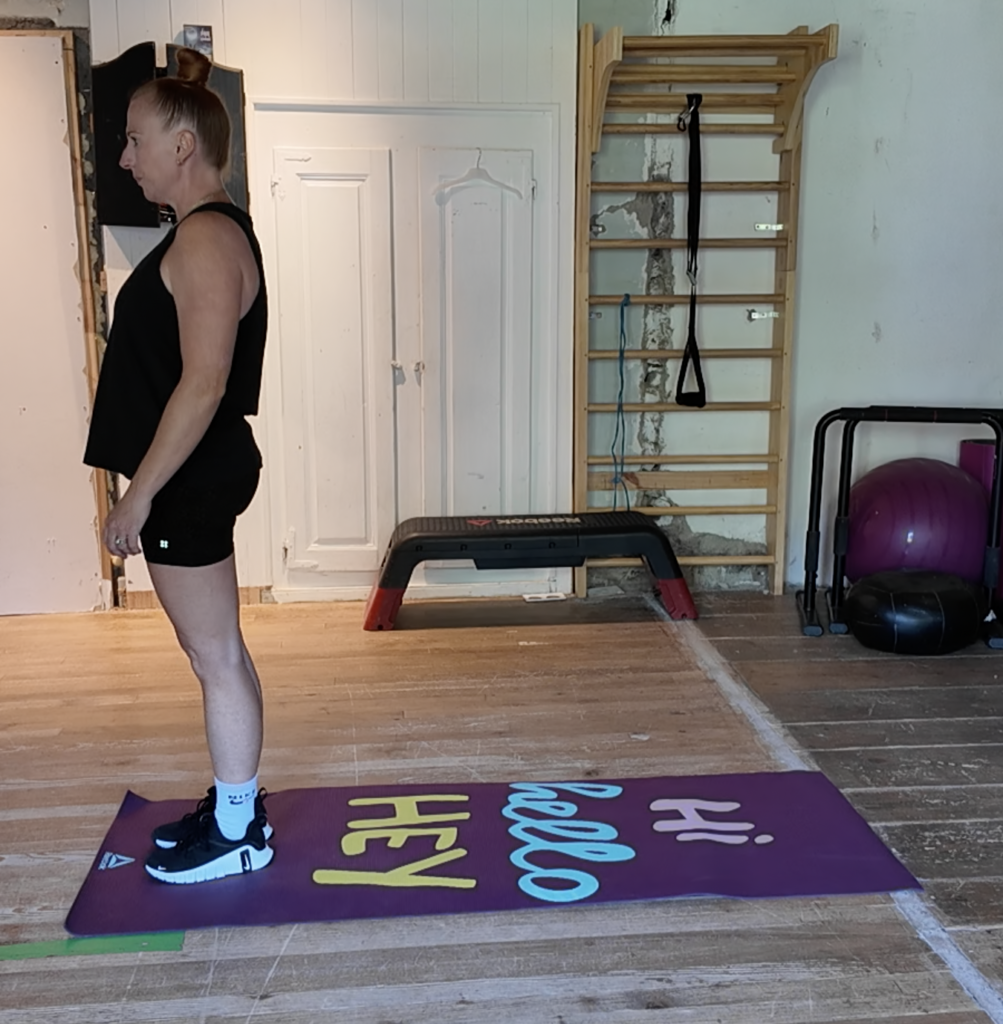
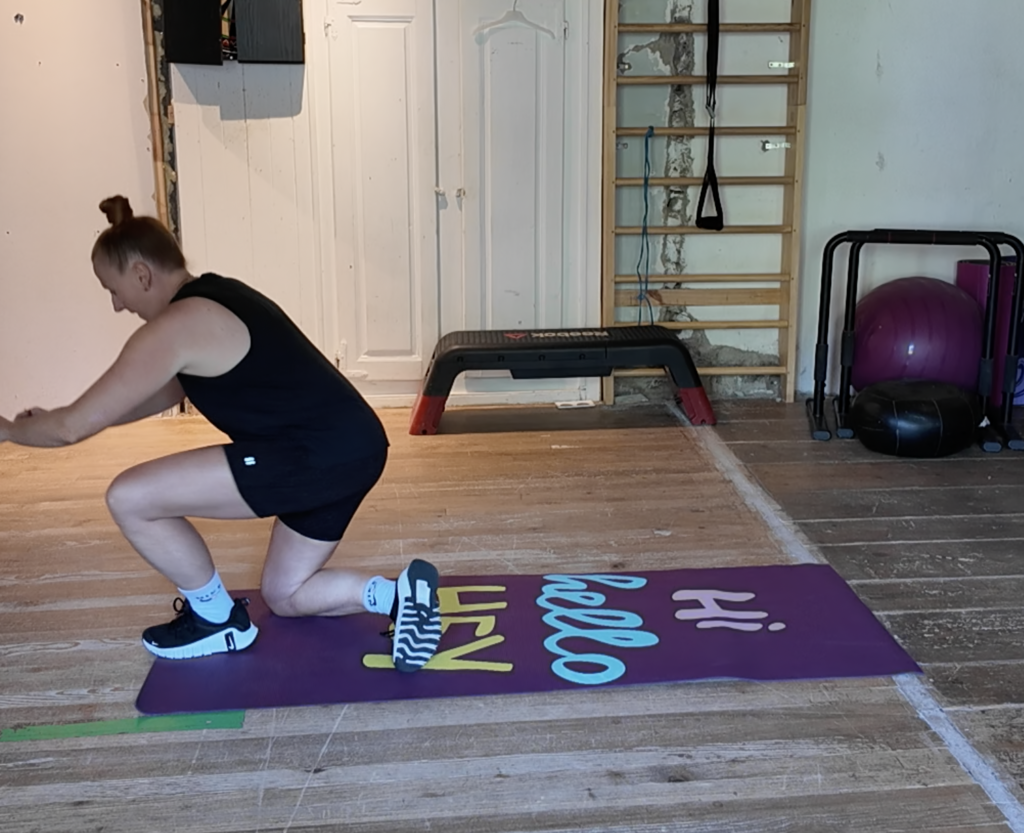
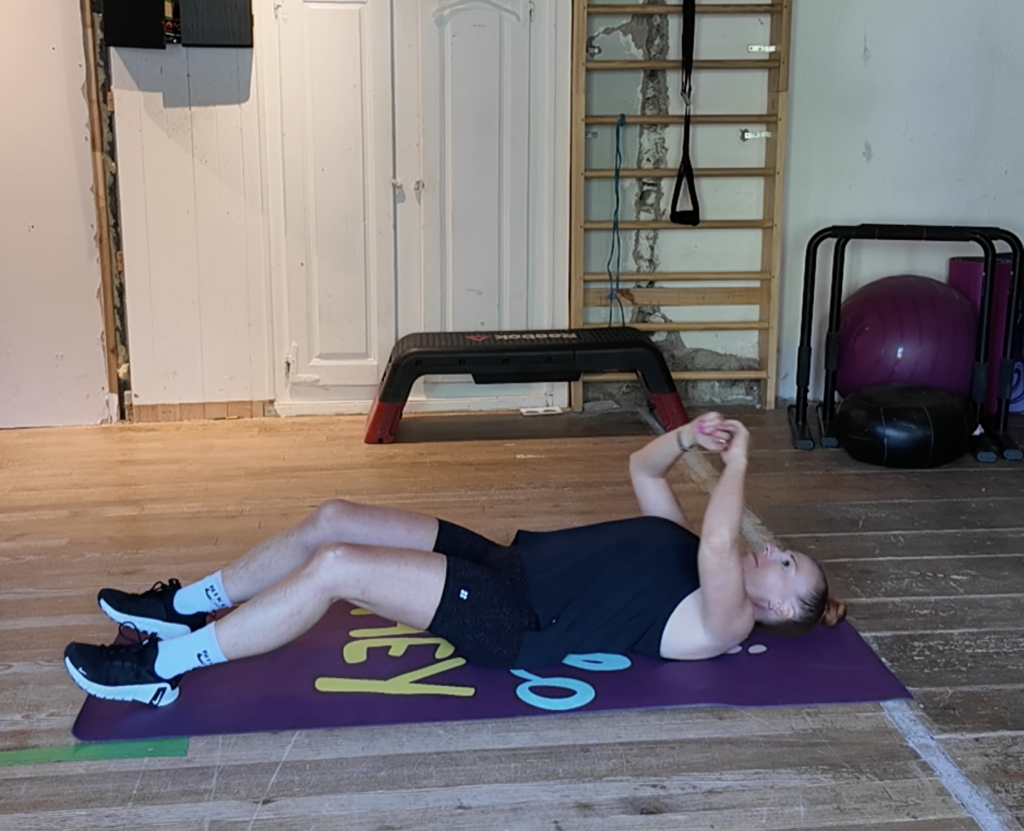
There isn’t one correct way to do it. You might lower yourself onto one knee first before sitting down, or if you have good mobility, you may be able to drop into a deep squat and lower yourself that way. The important thing isn’t how you do it—it’s whether you can do it under control without needing your hands for support.
If you struggle with this test, don’t panic. Like every other movement, it’s something that can be improved.
How to improve:
- Squats
- Lunges
- Step Ups
- Practice Getting up and down from the floor
- Work on lower body mobility
If you need to use your hands initially, that’s absolutely fine. As your strength and mobility improve, you’ll gradually rely on them less.
Test 2: The Deep Squat Hold (Mobility)
Our second pillar is mobility, and the test is the Deep Squat Hold.
This is one of the most natural resting positions for humans. If you’ve ever watched young children playing, you’ll notice they can sit comfortably in a deep squat without thinking twice about it.
As we get older, though, we spend more and more time sitting in chairs, driving, working at desks and generally moving less through full ranges of motion. Over time we lose mobility through our ankles, hips and knees, and eventually that deep squat becomes something we simply can’t do anymore.
The test is straightforward.
Can you hold a deep squat with your heels flat on the floor, your chest up and without holding onto anything for around 30 seconds?
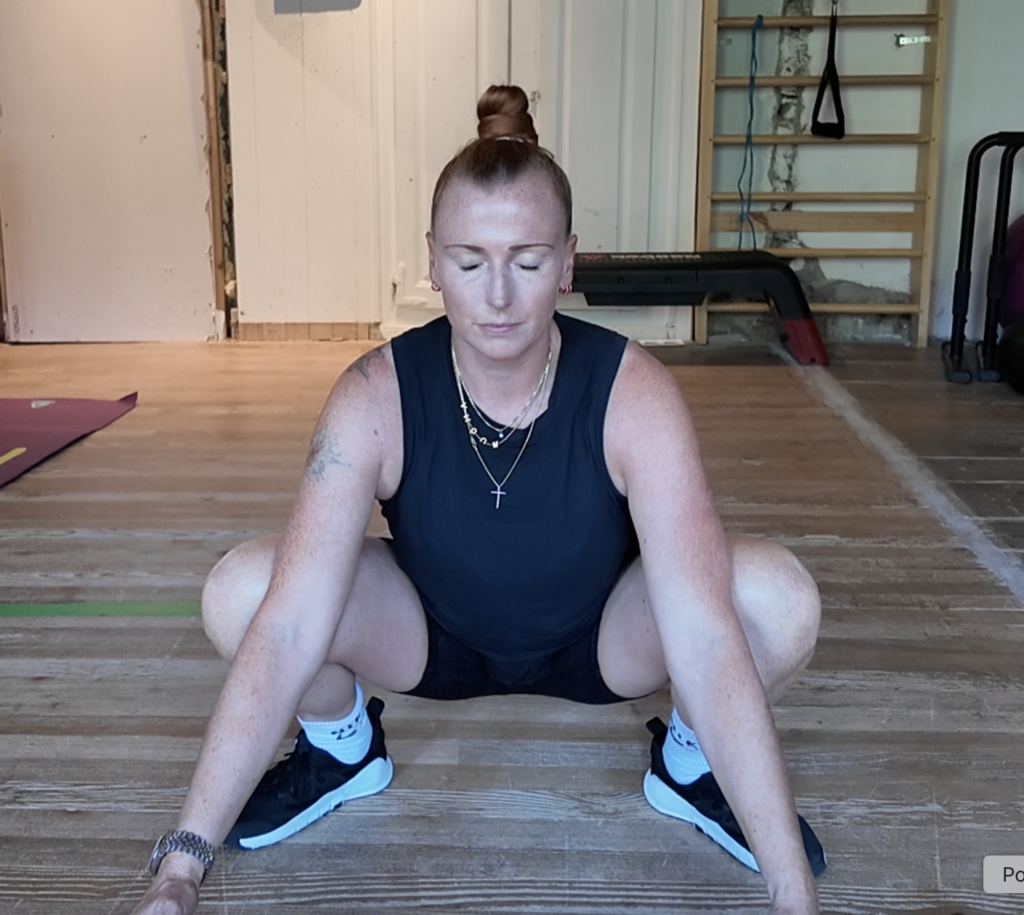
If your heels lift, you fall backwards or you simply can’t get into the position, you’ve identified an area that needs a little attention.
I’ll be completely honest—I haven’t always been good at this one.
When I first started working on my mobility, I couldn’t hold a deep squat without my heels lifting. I have naturally tight hips and ankles, and that made this position really difficult for me.
But the encouraging thing is that mobility improves with practice.
Over time, by consistently working on my ankle mobility and hip mobility, I’ve made huge improvements. It just goes to show that these things aren’t fixed. Your body can adapt if you give it the opportunity.
One of the exercises that helped me the most was holding onto something stable, like the edge of a sofa, while sitting into the squat position. From there I’d gently shift my weight from side to side, improving my ankle mobility while becoming more comfortable in the position.
Supported squat holds, ankle mobility drills, hip mobility work and stretches like the World’s Greatest Stretch are all fantastic ways to improve.
If you aren’t already including some mobility work in your weekly routine, I genuinely think it’s one of the best investments you can make in your future self.
Nobody wants to bend over one day to pick something up and suddenly put their back out because their joints have become stiff and their body simply doesn’t move well anymore.
Good mobility keeps us moving freely, reduces aches and pains and allows us to keep doing the activities we love.
To improve, work on ankle, knee and hip mobility. Here is a couple of mobility session to help get you started.
Test 3: The Dead Hang (Grip Strength)
We’re moving back to strength now, but this time it’s upper body strength and grip strength.
Grip strength is one of those things most people never think about, yet researchers often use it as a marker of healthy ageing because weaker grip strength has consistently been linked to poorer health outcomes and a higher risk of mortality.
That sounds dramatic, but when you think about it, grip strength reflects overall muscle function. If your grip is weak, chances are your overall strength could do with some attention too.
The test is simple.
Find a pull-up bar at your local park or in the gym and see how long you can comfortably hold a dead hang.
Try to avoid just hanging through your shoulders. Instead, think about keeping your shoulders gently active and away from your ears while you hold the position.
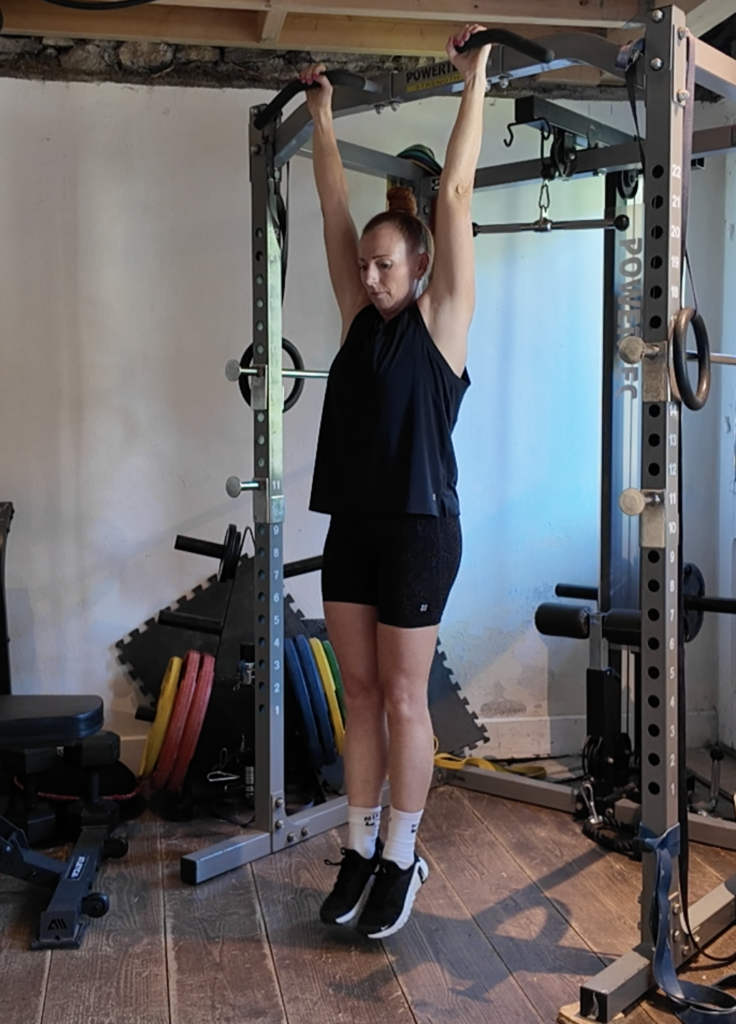
As a rough guide,
- Under 20s = needs work.
- 30 to 60s = good
- 60s + = excellent.
One practical tip before you try this—take your rings off! Trust me, your fingers will thank you afterwards.
I actually think this is a test many women struggle with, not because we’re incapable, but because so many of us simply don’t train our upper bodies enough.
The good news is that grip strength improves surprisingly quickly.
How To Train It
- General Strength training
- Deadlifts
- Rows
- Farmer’s carries
- Lifting heavier weights
- Supported Dead Hang starting with feel lightly on the floor and increase hold times
I also like to make it practical in everyday life. I challenge myself to carry all of the shopping bags from the car in one trip. Is it always sensible? Probably not! But it does force me to keep working on my grip strength in real-life situations, and that’s exactly what functional fitness is all about.
Test 4: Single-Leg Balance (Balance)
The third pillar of longevity is balance.
Now, how often do you actually stand on one leg? Probably not very often. I like to include balance work in my mobility sessions because it’s one of those skills that quietly declines if we don’t use it.
For this test, you’re simply going to stand on one leg and then close your eyes.
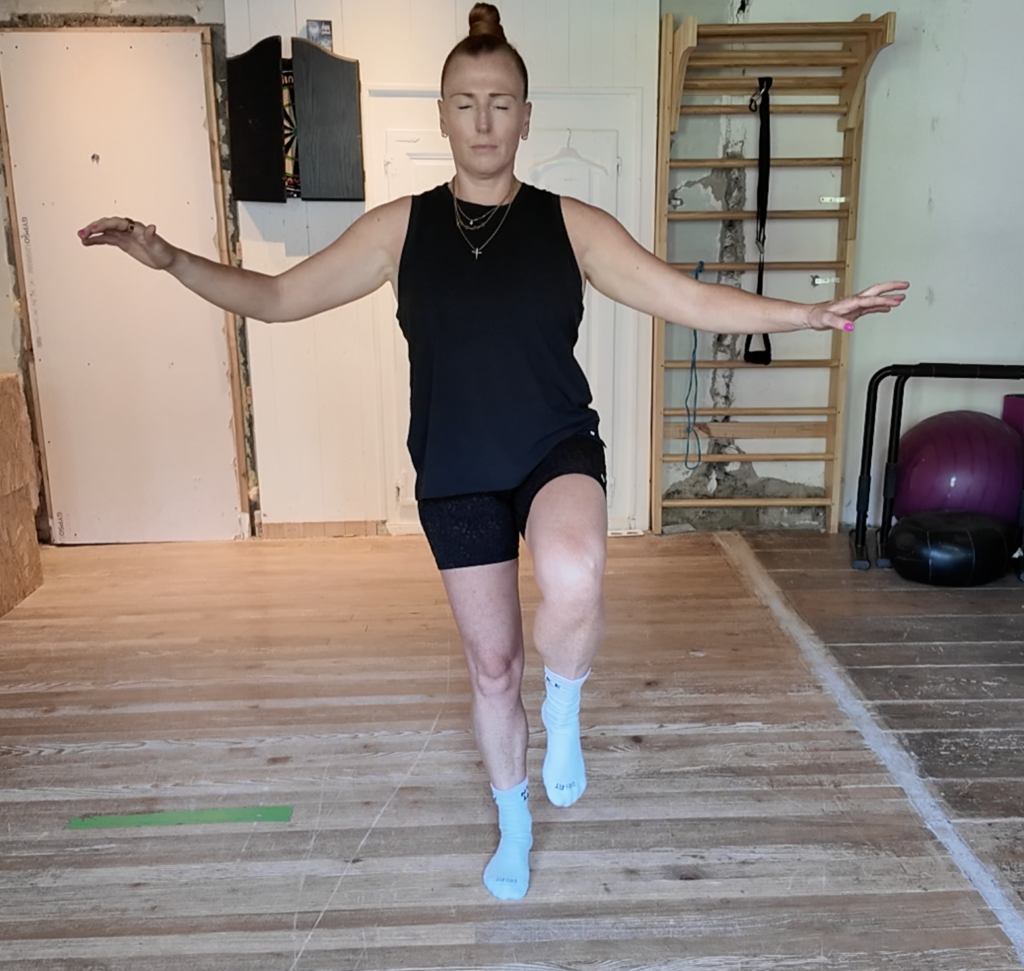
I’d recommend standing near a wall or a kitchen worktop the first time you try this because it feels much harder than you might expect. As soon as you close your eyes, your body has to rely much more on the muscles in your feet, ankles and core to keep you upright.
The reason balance matters so much is because falls are one of the biggest threats to our independence as we get older. We know that a serious fall later in life can have a huge impact on someone’s health, confidence and ability to remain independent. The better our balance is, the more likely we are to stay upright and avoid those potentially life-changing falls.
The goal is to balance on one leg with your eyes closed for around 20 to 30 seconds on each side.
Spread your toes out, stand nice and tall, engage your core and then close your eyes.
If you don’t quite manage it, don’t worry. Balance is a skill, and like any skill, it improves with practice.
One of my favourite ways to train it is by habit stacking. Every time I brush my teeth, I’ll stand on one leg. Once that becomes easy, I’ll close my eyes. Just remember to stay safe and have something nearby to hold onto if you need it.
How To Train:
- Balance with exercises like split squats, step-ups
- Spending more time barefoot so your feet can better sense the ground beneath you.
The more we challenge our balance, the better our body becomes at reacting when we need it.
Test 5: Standing Broad Jump (Power)
The fourth pillar is power, and this is one I don’t think enough women train.
I’ve spoken about power training quite a bit recently because it’s a big focus of the program by Stacy Sims that I’ve worked through several times. I genuinely think it’s one of the best training approaches for women over 40.
As we age, we naturally lose power, but I actually think a big reason for that is because we simply stop using it.
Think about when you were a child. You were constantly jumping, skipping, running and changing direction without even thinking about it. As adults, we stop doing those movements altogether.
I often ask women, “When was the last time you actually jumped?”
Power is closely linked to strength, but it’s your ability to produce force quickly. It’s what helps you catch yourself if you trip, climb stairs with confidence and move with energy. It also plays an important role in maintaining healthy bones, muscles and connective tissues.
The test is the standing broad jump.
You might remember doing this at school. Stand with both feet together and jump forwards as far as you can, landing safely on both feet.
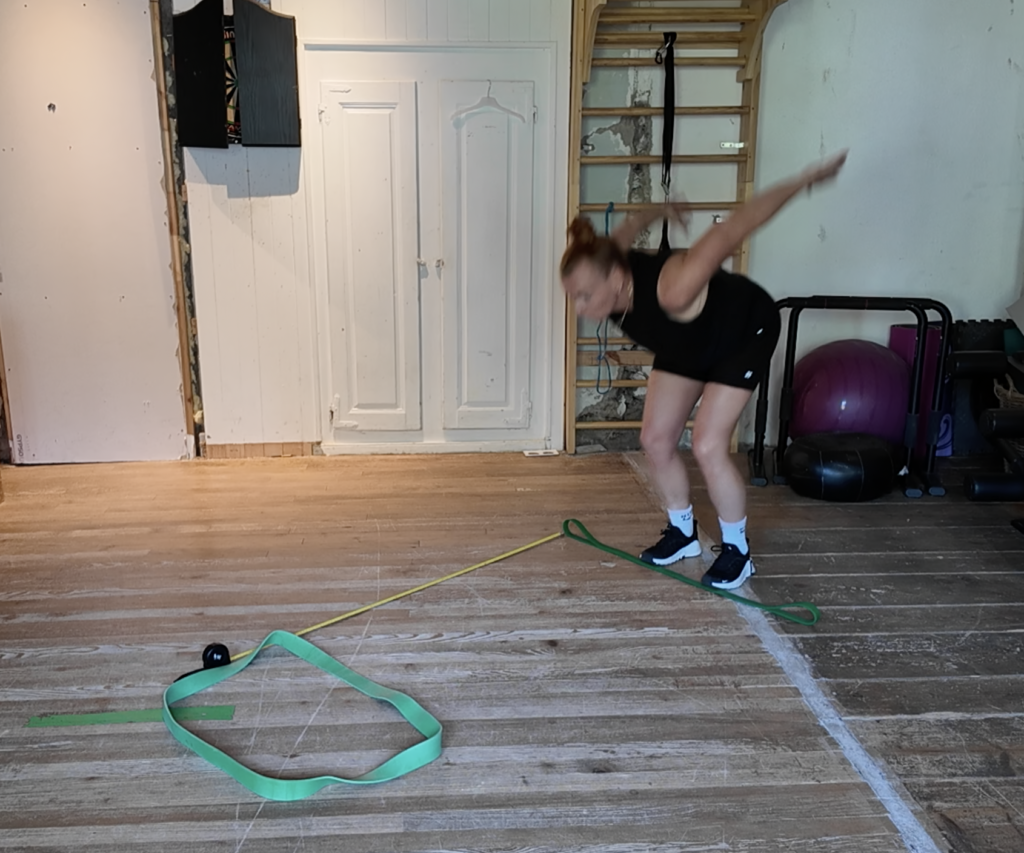
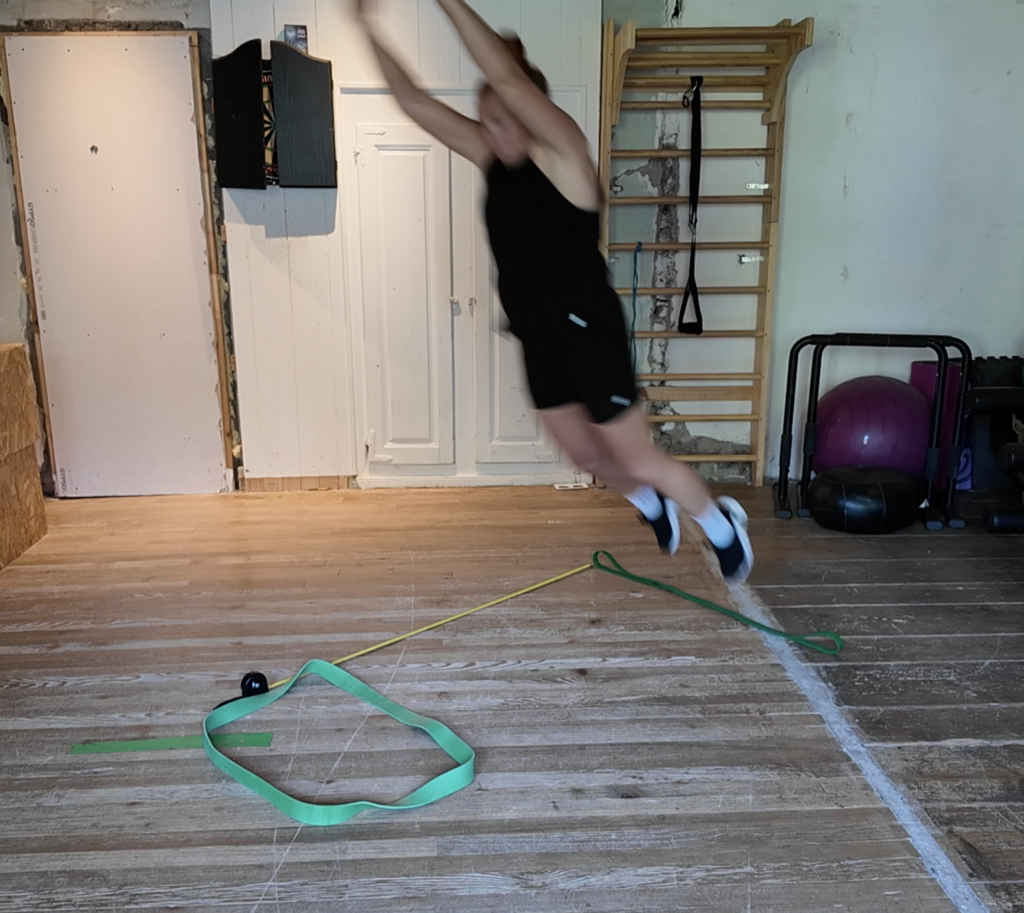
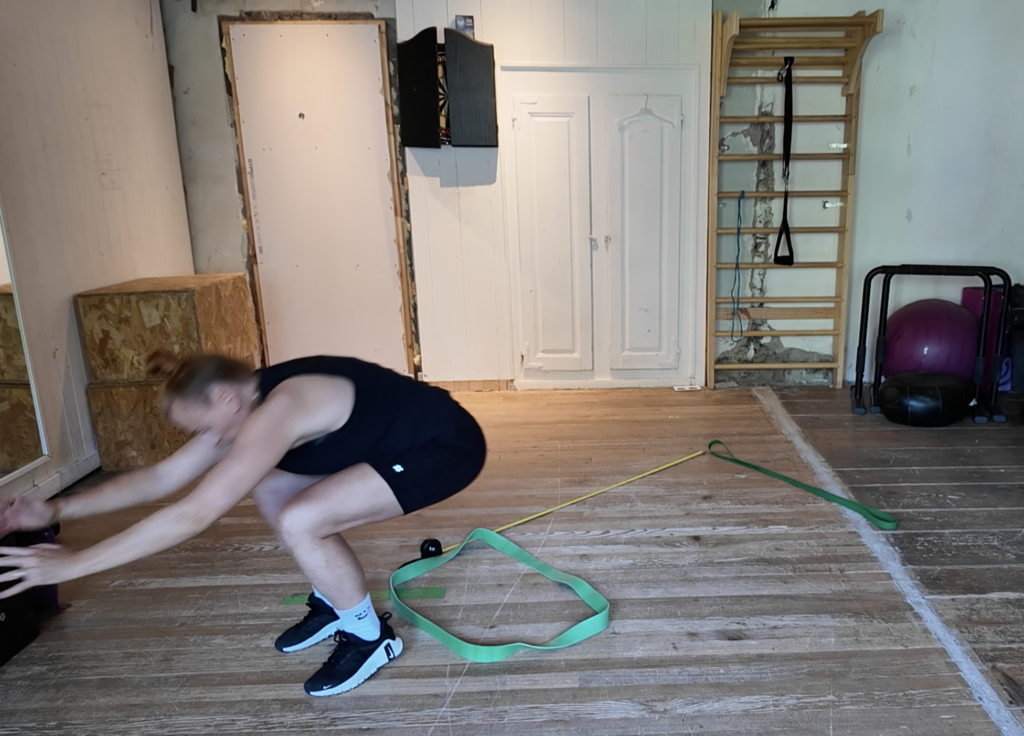
For women in their 40s, a good target is around 120 to 140 centimetres.
If you don’t quite hit that distance yet, don’t let it put you off.
How To Train It
- Pogo jumps
- Skater jumps
- Jump Squats
- Box jumps
- Drop Jumps
I know a lot of women are nervous about box jumps, but you don’t have to start on a high box. You can begin by simply practising small jumps on the floor before progressing to stepping or jumping onto something low.
As your confidence grows, your take-offs and landings become stronger and more controlled.
Personally, I know I feel younger, more athletic and more capable when I include power training in my week, and I think every woman over 40 should be doing some form of explosive movement.
Test 6: The 3-Minute Step Test (Cardiovascular Fitness)
The final pillar is cardiovascular fitness.
Now, I know many of us—including me at times—would happily skip cardio altogether. But our heart health is one of the strongest predictors of longevity, so it really is something we shouldn’t ignore.
For this test, all you need is a sturdy step.
Step up and down continuously for three minutes at a pace that gets your heart rate up. I actually worked quite hard during this test because I wanted to elevate my heart rate enough to make it meaningful. I used my Ultrahuman Ring to monitor my heart rate throughout, but you could use any heart rate monitor or simply check your pulse afterwards.
Once you’ve finished, wait one minute and then measure your heart rate.
Ideally, your heart rate should have recovered to below 100 beats per minute after one minute. What we’re really measuring here is how efficiently your cardiovascular system recovers after exercise.
This was actually the one I failed.
After one minute, my heart rate was still just over 100 beats per minute, which tells me that although I walk every day and stay active, I’ve probably been avoiding structured cardio a little more than I should.
Sometimes these tests simply confirm what we already know.
The good news is that cardiovascular fitness responds really well to training.
Adding more Zone 2 cardio, brisk walking, cycling or swimming can all help. I also think there is a place for higher-intensity training. I talk a lot about sprint interval training because it’s an incredibly time-efficient way to improve your cardiovascular fitness, and it’s something I’m going to be making more of a priority myself.
How Did You Score?
So, out of six, how many did you pass?
If you passed all six, that’s fantastic. You’ve built yourself a really strong foundation for healthy ageing, so keep doing what you’re doing.
If you scored four or five, you’ve got a solid foundation, but you’ve probably identified one or two areas that deserve a little more attention.
If you scored two or three, don’t see that as a negative. You’ve simply highlighted the biggest opportunities to improve your health over the coming months.
And if you didn’t pass any of them, please don’t be discouraged.
Every single person starts somewhere. The purpose of these tests isn’t to make you feel bad. It’s to give you a starting point so you know where to focus your energy.
For me, longevity isn’t about trying to live forever.
It’s about staying strong, capable and independent for as long as possible. I always love the saying, don’t worry about being the oldest person in the gym—worry about being the youngest person in the nursing home.
That’s exactly what we’re training for.
I’d genuinely love to know how you got on. Let me know your score out of six in the comments below and tell me which test surprised you the most.
And if you’re ready to start improving your strength, mobility and overall fitness, don’t forget to join my FREE 5-Day Kickstart Challenge. It’s the perfect place to start building healthy habits that will support you not just this year, but for many years to come.
Leave a Reply