One year older, 15 kg lighter and feeling fitter than ever. But was I actually ready to take on HYROX solo at 43?
Twelve months ago, I completed my first HYROX race as part of a female doubles team. I’m pretty sure that somewhere during that race I turned to my partner and said, “Absolutely hell no, would I ever do this on my own!”
And yet, here we are, 12 months later, and I’ve just completed my first HYROX solo race at 43 years old.
This time around, I’m about 2.5 stone lighter (15 kg) and I’m definitely feeling a lot fitter. I’ve been working hard on maintaining my strength, improving my running and building my cardiovascular fitness.
But there’s a big difference between splitting the workload with a partner and having to complete every single station yourself.
So, was I actually ready for HYROX solo?
I’m going to take you through how I trained, what I did differently this year, how the race went, the mistakes I made and, of course, my finishing time.
Prefer to watch? You can follow my full HYROX Solo Race Day Vlog below.
You might also enjoy: What It’s REALLY Like Doing HYROX as a Woman Over 40 – My Female Doubles Race Day Vlog
Why I Decided to Take On HYROX Solo at 43
One of the things I really like about HYROX is that you don’t have to completely overhaul your entire life to train for it.
Unlike preparing for something like a marathon or an ultra, where training can take up a huge amount of your time, HYROX allows me to continue doing many of the things I already enjoy.
It’s hybrid training, which means combining strength and cardiovascular fitness.
And if you’ve followed me for a while, you’ll know that strength training has always been a huge priority for me, especially now that I’m in my 40s.
But there’s also the running.
Now, I am not a runner. I don’t particularly enjoy running, and I’m certainly not a fast runner!
Running has always been my weakest area when it comes to HYROX, and that’s something I really wanted to improve this year.
The good thing is that I didn’t necessarily need to start running longer and longer distances. Instead, I wanted to get better at running the distances required, improve my pace and feel more comfortable running when already fatigued.
And having already completed HYROX doubles last year, I knew exactly what I was letting myself in for.
Well, sort of!
How I Trained for HYROX Solo as a Woman Over 40
My approach to training this year was slightly different, particularly because I’ve lost quite a significant amount of weight over the past 12 months.
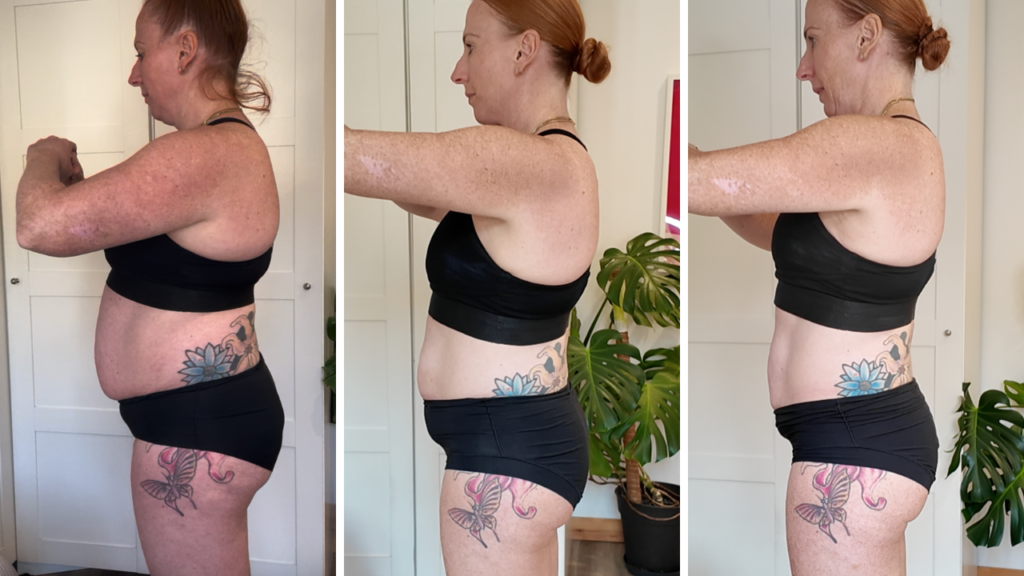
One thing I’ve been really conscious of throughout my weight-loss journey is maintaining my muscle mass and strength.
I didn’t want to simply become lighter. I wanted to become fitter and stronger too.
Following Stacy Sims’ Strength Training Programme
For my strength training, I’ve been following a programme based around Dr Stacy Sims‘ training principles.
I’ve been working through the Power Happens programme, focusing on maintaining my strength while incorporating the type of training that’s particularly important for women in midlife.
I’m planning a full review of the programme, so I’ll go into much more detail about the exercises, structure and my results in that post.
Related reading: My Stacy Sims / Power Happens Training Programme Review
Throughout my HYROX preparation, I generally completed three to four strength training sessions each week.

Initially, I focused on continuing to lift heavier weights and maintaining my strength despite losing weight.
Then, as the race got closer, I started incorporating more higher-repetition work while still maintaining the weights I was lifting.
I wanted to make sure I had the strength to complete the stations, but also the muscular endurance to keep going when I was already tired.
Adding HYROX Simulations and Running
Alongside strength training, I added one higher-intensity conditioning session each week.
These were more HYROX-style simulations, incorporating exercises such as burpees, walking lunges and explosive power movements.
I wanted to get used to moving between different exercises while my heart rate was elevated.
I also included one dedicated running session each week, which was either a steady-state run or a threshold session.
The threshold running was particularly useful because I really wanted to improve my pace.
And I have to say, I was definitely feeling fitter going into this year’s race.
Did Losing 15 kg Make Running Easier?
Absolutely, I felt a difference.
Being around 15 kg lighter has made running feel much more manageable for me.
Previously, I often felt like I was just shuffling along, whereas this year I actually felt like I was running.
I’m still slow, and running is definitely the area where I have the most room for improvement, but I was enjoying the process of getting better.
Of course, I can’t put all of that improvement down to weight loss. I’ve also been consistently strength training and working on my cardiovascular fitness.
And I think that’s an important distinction.
Losing weight and improving your fitness aren’t necessarily the same thing.
For me, the goal has been to do both. To lose excess body fat while maintaining muscle, building fitness and becoming more capable.
That’s something I’ve talked about throughout my Mounjaro weight-loss journey, particularly the importance of strength training while losing weight.
Related reading: How to Maintain Muscle and Strength While Taking Mounjaro or GLP-1 Medication
HYROX Race Day: A 7 PM Start and Getting My Nutrition Right
Race day finally arrived, and annoyingly, I had a 7 PM start time.
Of course, despite not racing until the evening, I was awake at stupid o’clock in the morning!
The one advantage of having such a late start was that I managed to squeeze in an afternoon nap.
Once I’d rested, it was time to get myself ready.
What I Wore for HYROX
For my race outfit, I went with Sweaty Betty, and I have to say, I absolutely love the shorts I wore.
They’re incredibly comfortable, and one of the biggest things for me is that they don’t cause any chafing. These shorts stay put and do not roll up when running like a lot of shorts can.
When you’re running, lunging and doing burpees for well over an hour, the last thing you want to be worrying about is your shorts riding up or rubbing.
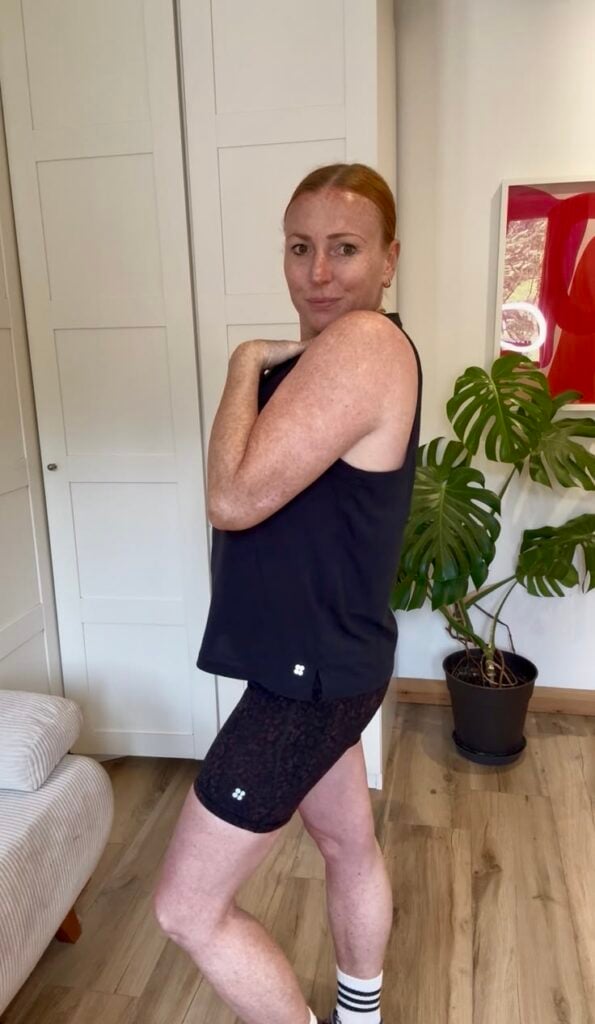
Shop my race outfit: Sweaty Betty Power 6″ Shorts
What I Ate Before My HYROX Race
I wanted to make sure I’d eaten something before leaving home, as it takes just over an hour to drive to Geneva from where I live.
With around three hours until the race, I opted for what I thought would be a fairly safe meal.
Turkey, rice and vegetables.
Nothing particularly heavy, and something I expected to digest relatively easily.
I also had my daily IM8 supplement, which I take as part of my usual routine. It contains electrolytes, along with a range of other nutrients.
I’ve been using IM8 for several months now and have shared my experience in a separate review.
Related reading: My Honest IM8 Review After Four Months
Shop IM8: My IM8 Affiliate Link / Discount to get 10% off
I continued drinking water and making sure I was hydrated before heading down to Geneva.
At the time, I thought I’d got my pre-race nutrition pretty well sorted.
Unfortunately, that wasn’t quite how things worked out!
The Start of My First HYROX Solo Race
Surprisingly, I wasn’t feeling particularly nervous during the day.
It was only when we got closer to Geneva and the venue that I started to feel those little waves of nerves.
But I actually think that’s a good thing.
I want to keep challenging myself and doing things that make me feel a little bit uncomfortable.
After warming up, it was time to get to the start line.
I tend to position myself towards the back of the pack because I know it takes me a little while to settle into my running pace.
I didn’t want to get carried away with everyone else and start too quickly.
So, for the first couple of running laps, I deliberately held myself back.
I was trying to keep my breathing controlled, settle my heart rate and avoid using too much energy too early.
SkiErg and Sled Push: A Surprisingly Strong Start
The SkiErg went reasonably well, and then it was time for the sled push.
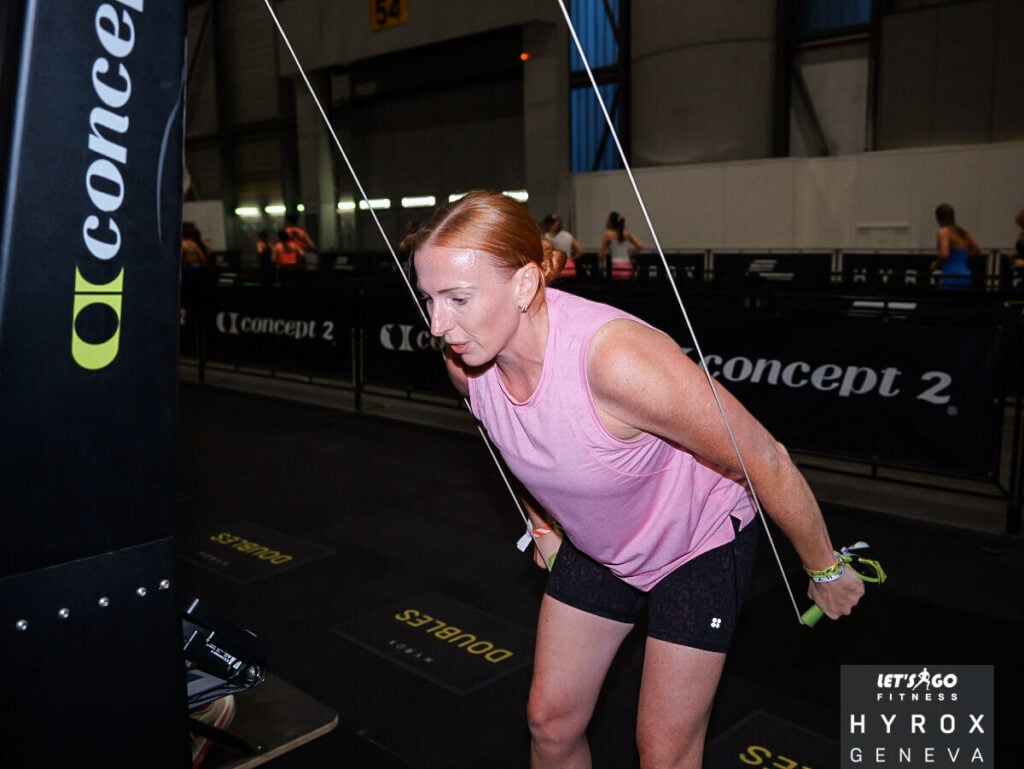
Now, this was one of the stations I was slightly worried about because I hadn’t really been able to practise it.
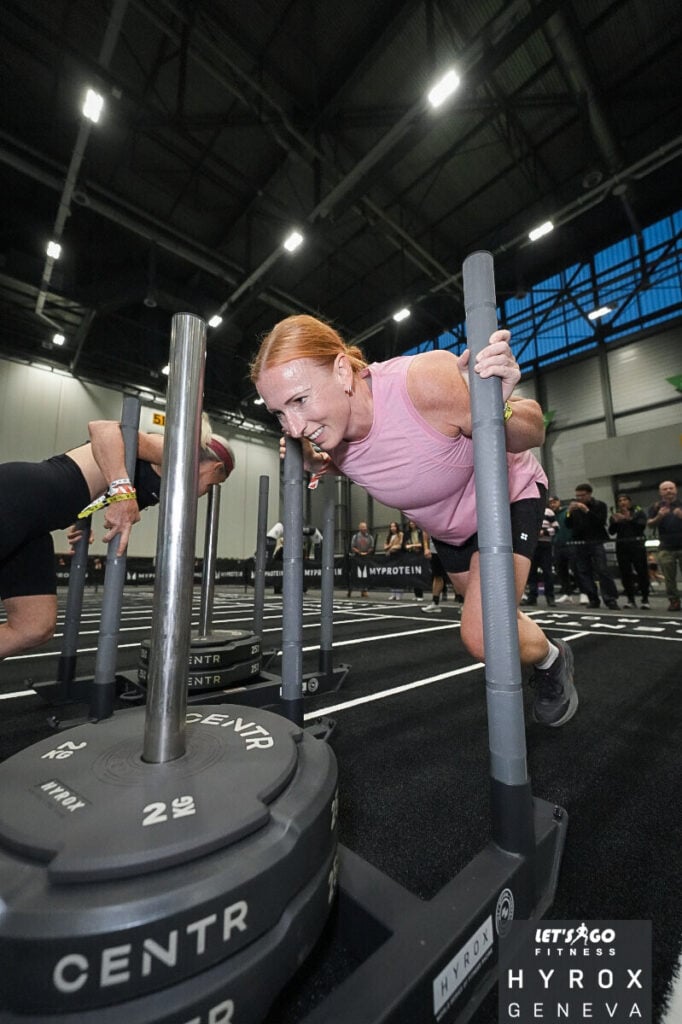
I don’t have access to a sled at home, so I wasn’t entirely sure how it was going to feel on race day.
But surprisingly, I felt really good!
In fact, the sled push turned out to be my fastest station, and I ranked quite well on it.
My legs felt strong, and I could really feel the benefit of all the strength training I’d been doing.
This was one of those moments where I was reminded that you don’t necessarily need to spend all your training time practising the exact HYROX stations.
Building a solid foundation of strength can make a huge difference.
Sled Pull: My First Penalty
Unfortunately, the sled pull didn’t go quite as smoothly.
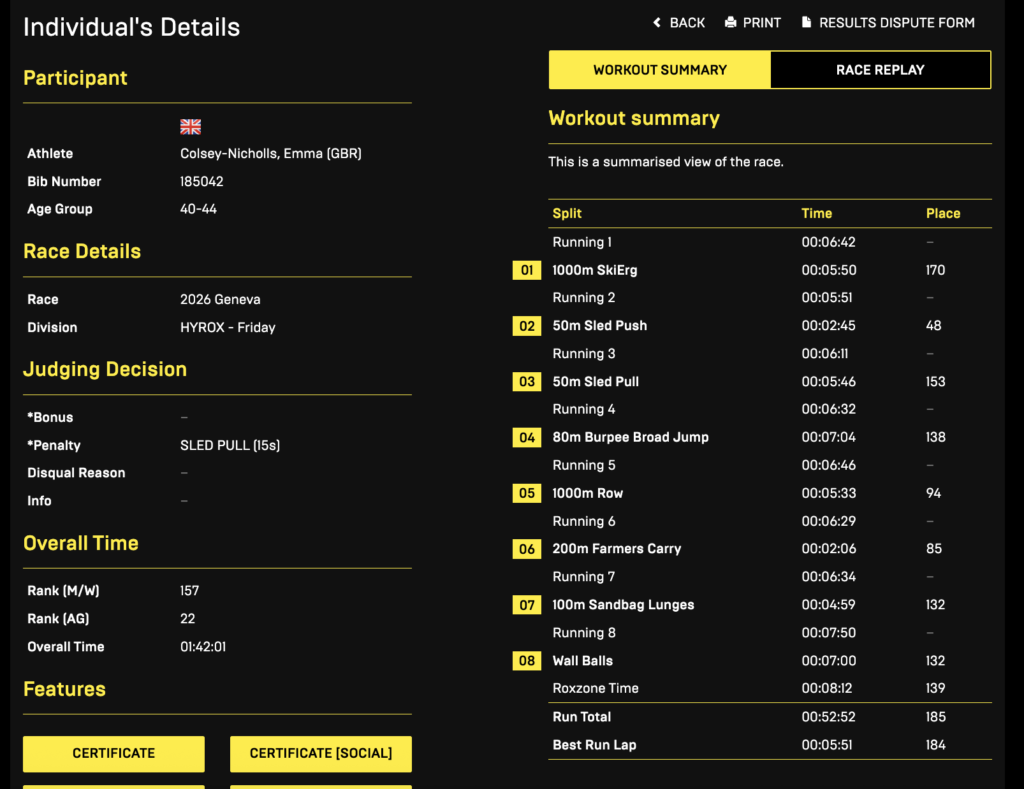
I ended up with a 15-second penalty because apparently my foot touched the line.
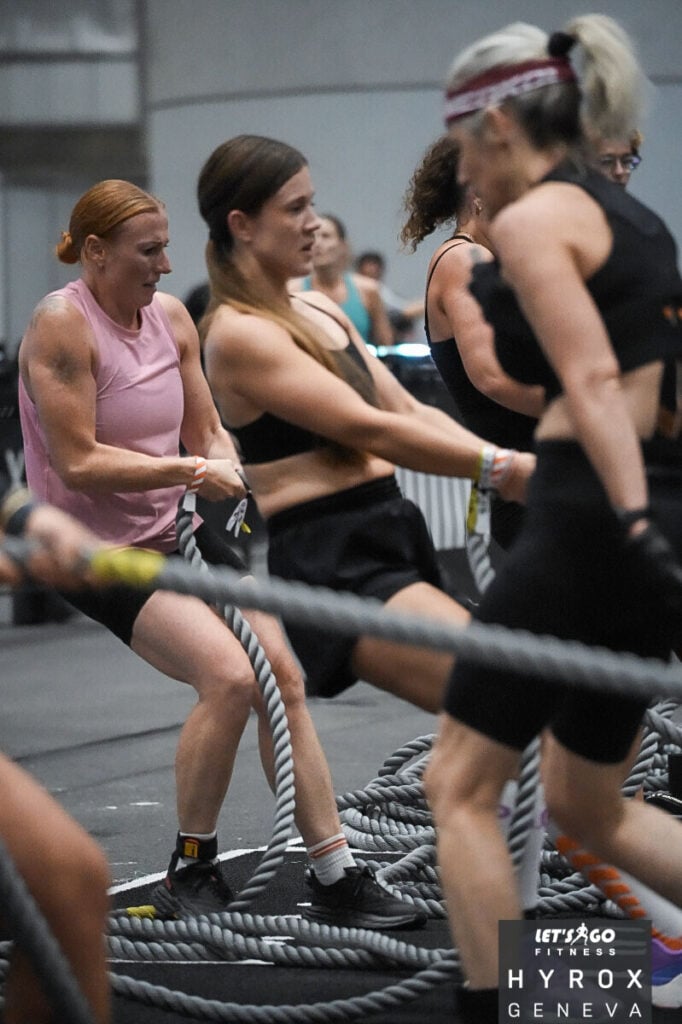
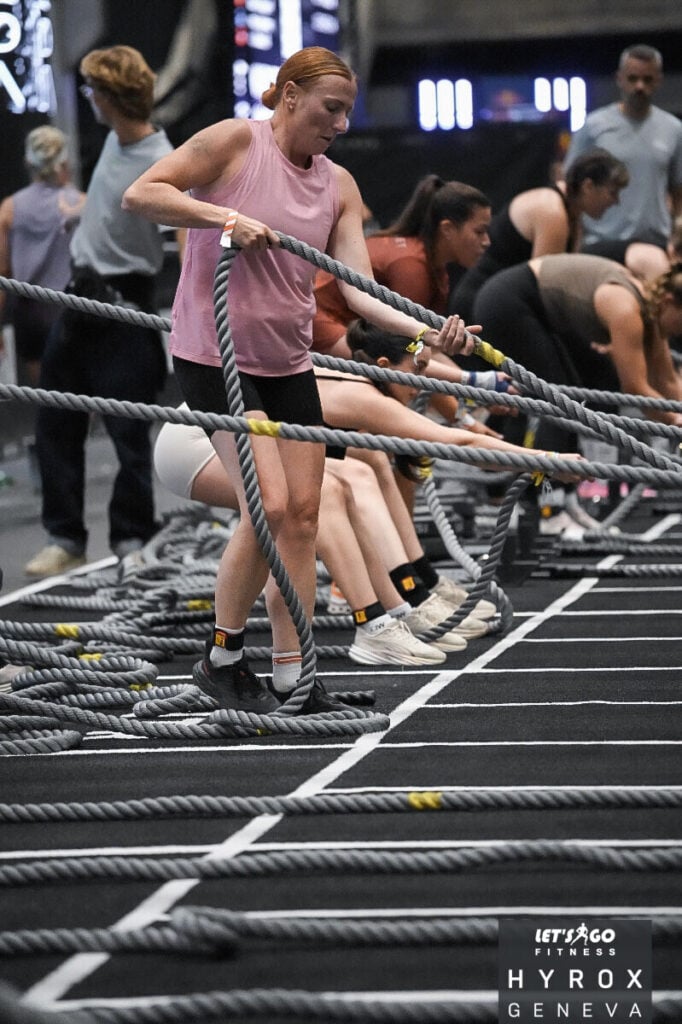
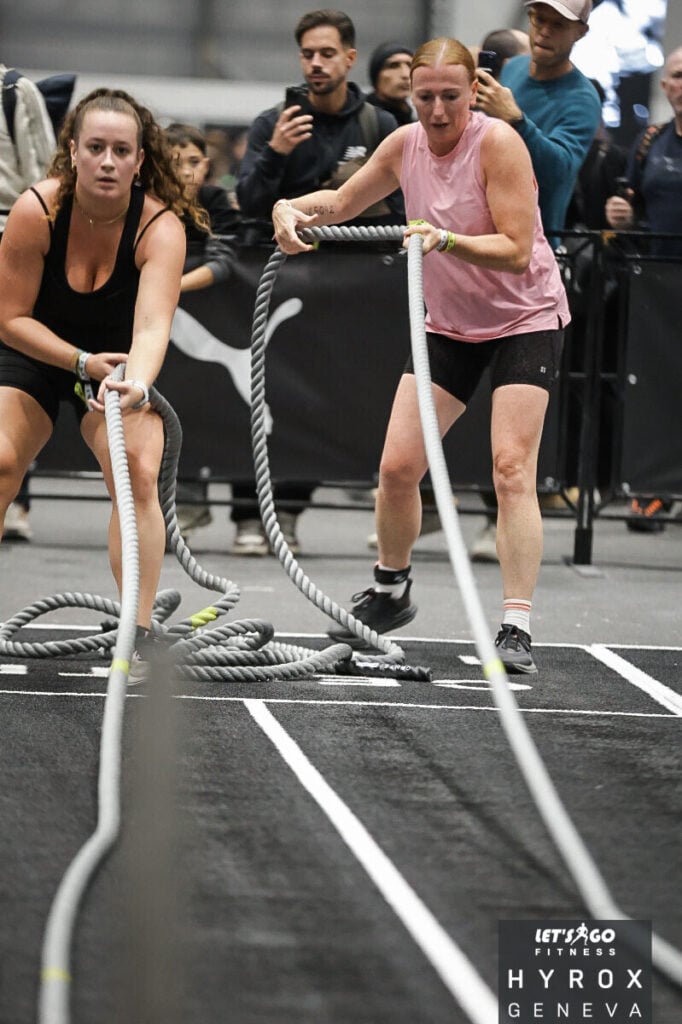
I also managed to start an extra lap that I didn’t actually need to do.
And frustratingly, we made a similar mistake during last year’s doubles race!
It’s so easy to lose track of where you are when you’re concentrating on getting through the exercise, keeping your breathing under control and trying to maintain your pace.
Definitely something I need to work on if I do another race.
When Things Started Going Wrong: Running, Stitches and Burpees
Up until this point, I’d been feeling pretty good.
But it was during the third run that things started to get difficult.
I developed a really uncomfortable stitch, and I could tell that the food I’d eaten before the race hadn’t settled as well as I’d expected.
I suspect this may have been connected to the fact that I’m still taking a very small maintenance dose of Mounjaro.
One of the effects of GLP-1-based medications is that they can slow gastric emptying, meaning food can remain in your stomach for longer.
I’d completely overlooked that when planning my pre-race meal.
I can’t say for certain that the medication caused my symptoms, but it’s something I would consider much more carefully if I were racing again.
Related reading: My Mounjaro Maintenance Journey – What Happened When I Lowered My Dose
Burpee Broad Jumps Were Brutal
By the time I reached the burpee broad jumps, I was really struggling.
This is probably the station I find the hardest mentally and physically.
Last year, when I was doing doubles, I felt like my partner took on a huge amount of the work at this station.
This year, there was nobody to share it with.
I’d actually practised burpees consistently in the run-up to the race, and I definitely felt better prepared than last year.
But with the stitch, I was having a really tough time.
At one point, I was even a little bit sick in my mouth.
Lovely!
It really was just a case of stopping when I needed to, catching my breath and getting moving again.
And trying not to pay too much attention to the people flying past me.
Because that’s one of the things about HYROX. You’re surrounded by people moving at completely different speeds, and it can be easy to get caught up in comparing yourself to everyone else.
But I knew I needed to focus on my own race.
Just keep moving.
Running Actually Felt Better Than Last Year
One thing I noticed during the race was how different the running felt compared with last year.
During my doubles race, I remember my heart rate staying incredibly high, even when I moved back into the running sections.
This year, the runs actually felt a little more like recovery.
I could settle into a pace and catch my breath rather than feeling like I was constantly working at my absolute limit.
When I look back at my splits, my running wasn’t dramatically faster than last year.
But the important thing is that I was completing every station myself this time.
And subjectively, I felt much more comfortable.
That was a huge improvement for me.
I also found myself getting really thirsty throughout the race. I hadn’t taken any hydration with me, so I was stopping at the available water stations.
Another thing to think about for next time!
Rowing, Farmer’s Carry and Sandbag Lunges: Where My Strength Paid Off
Thankfully, by the time I reached the rowing station, my stitch was starting to settle.
And rowing is something I actually quite enjoy.
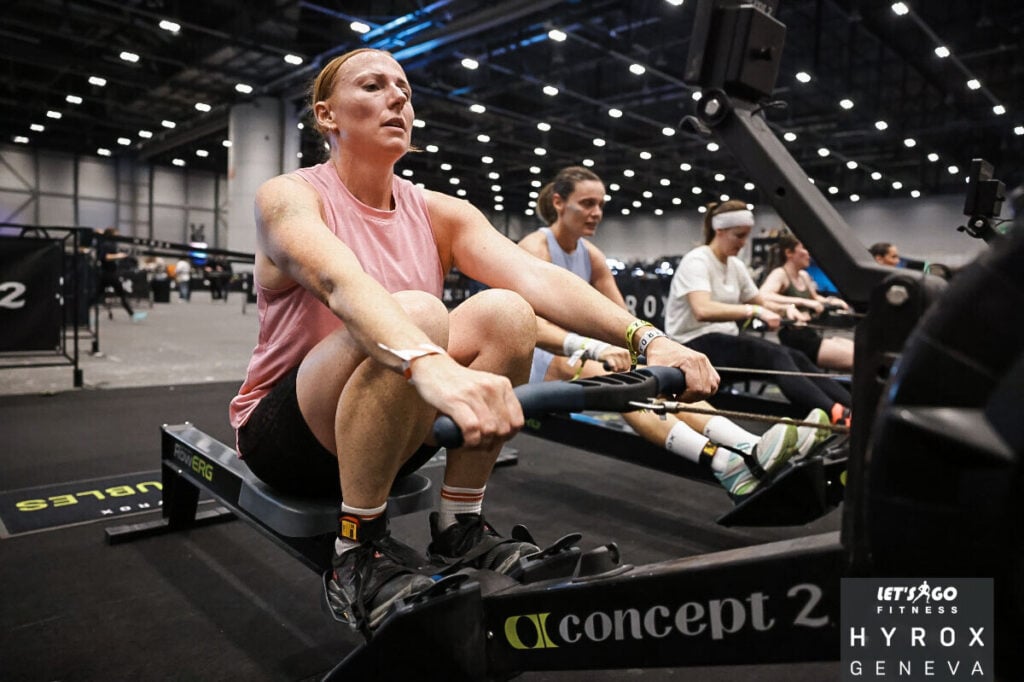
I feel comfortable on the rowing machine and generally feel like I can just keep going.
But looking back at the footage, I do wonder whether I held back a little too much.
I knew I still had several stations to complete, and I didn’t want to completely exhaust myself.
However, there’s always that question afterwards.
Could I have pushed a little harder? Could I have shaved a bit more time off?
It’s about finding that balance between pushing yourself and not completely blowing up before the end.
Farmer’s Carry: Grip Strength Matters
The farmer’s carry was another station where I felt really confident.
I’ve always had pretty good grip strength, and I never use lifting straps when I’m strength training.
I managed to complete the two laps without any major issues, and I felt strong throughout.
Again, looking back, I wonder whether I could have moved a little faster.
Perhaps even managed a little trot rather than walking the whole thing.
But in the moment, you’re constantly making decisions about how much energy to use and how much you need to save.
Sandbag Lunges: My Biggest Improvement
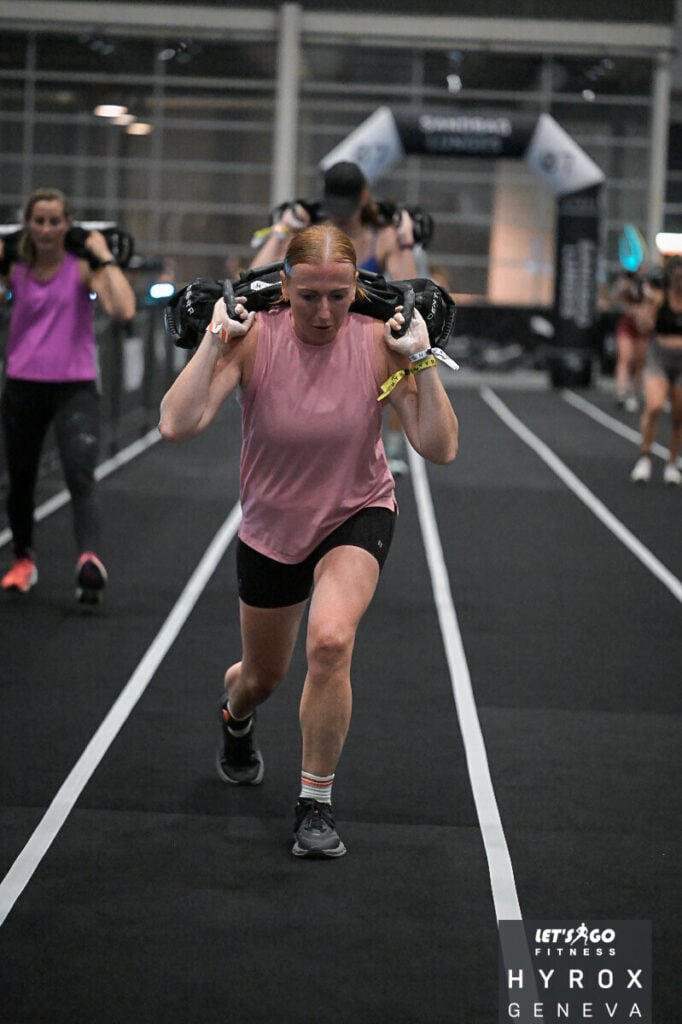
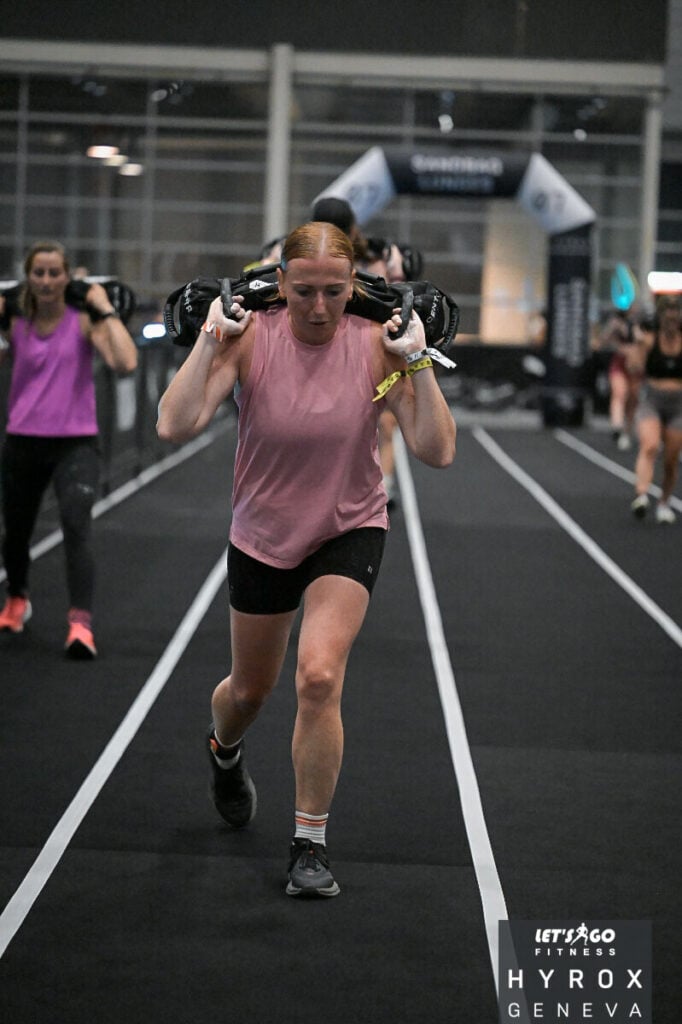
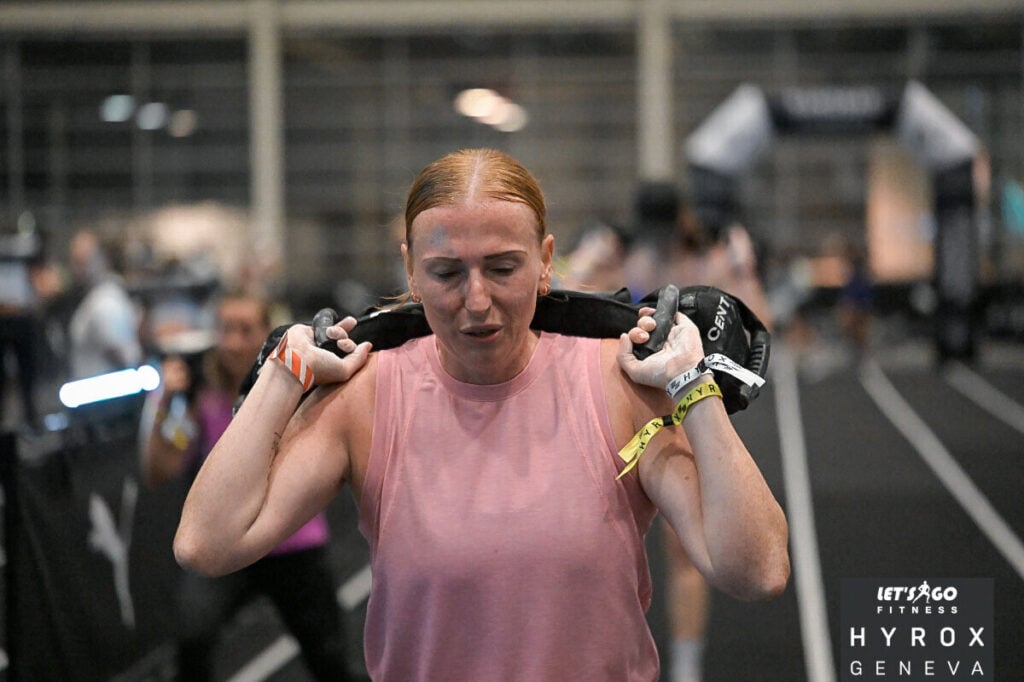
The sandbag lunges were probably one of the stations where I noticed the biggest improvement compared with last year.
During my doubles race, my legs were incredibly shaky, and I was having to keep swapping over with my partner.
This year was completely different.
I’d done a lot of lunges during my training and had really focused on maintaining good depth and building strength.
I also regularly trained with 20 kg on my back, which was double the weight I needed to use on race day.
As a result, the race weight felt manageable.
I was able to keep moving consistently, and I was actually overtaking people at this station.
That felt really good!
It’s another example of why I place so much emphasis on strength training, especially for women over 40.
Being strong isn’t just about how much weight you can lift in the gym. It’s about what that strength allows you to do.
The Final Run and Wall Balls: Mind Over Matter
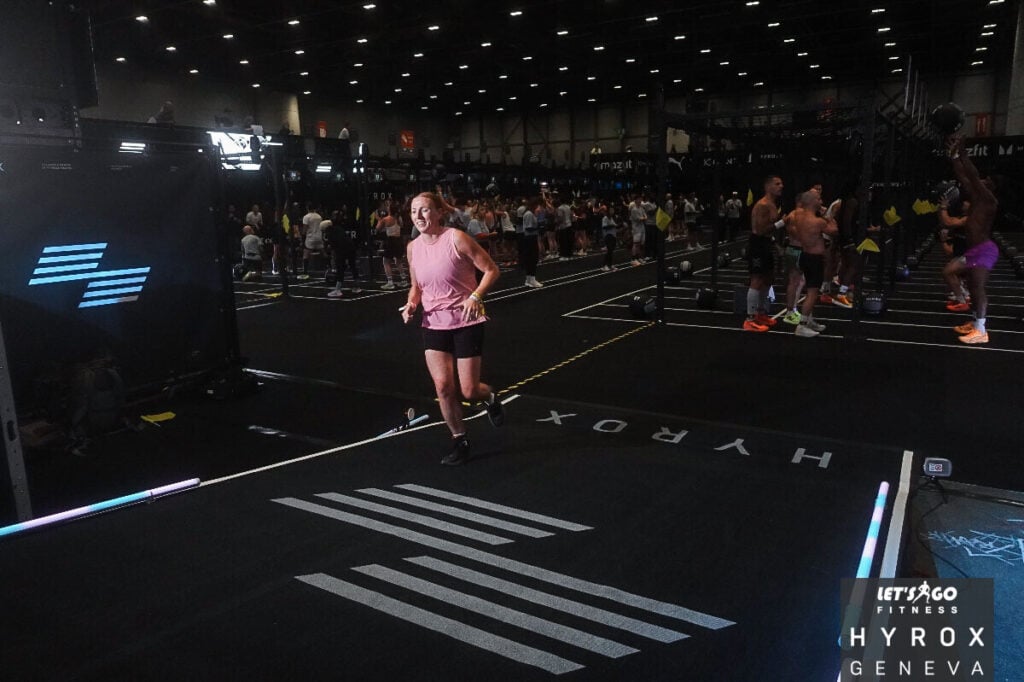
By the time I reached the final run, I knew the end was in sight.
My stitch had settled, and it was just a case of getting my head down and keeping going.
I tried to push my pace as much as I could.
Which, for me, still isn’t particularly fast!
But that’s the thing.
You don’t have to be the fastest person in the room to challenge yourself.
When I turned 40, I decided I wanted to try something new every year.
Since then, I’ve done triathlons, completed my first HYROX doubles race and now taken on my first solo HYROX.
For me, being fit in my 40s is about continuing to challenge myself, getting stronger and seeing what my body is capable of.
The Final Challenge: Wall Balls
And then there were the wall balls.
Watching the footage back, I have to admit that I thought I was squatting a lot lower than I actually was!
I was watching myself thinking, “Oh, those squats aren’t quite deep enough!”
I think I was pretty lucky with my judge, who didn’t seem to be watching quite as closely as I might have expected.
It’s definitely something I need to improve if I race again.
By this point, I was exhausted.
I was taking breaks when I needed them, trying to regain my focus and then pushing through another few repetitions.
I just kept reminding myself that my body was capable of doing hard things.
And HYROX is hard!
It’s a relatively short event compared with some endurance challenges, but you’re working at a high intensity for a sustained period.
And that’s one of the reasons I enjoy it.
It challenges your strength, cardiovascular fitness, muscular endurance and mental resilience all at once.
My HYROX Solo Finish Time: How Did It Compare with Last Year?
Going into this race, I wasn’t entirely sure what sort of finishing time to expect.
Last year, I completed HYROX doubles in 1 hour and 32 minutes.

Someone had mentioned that I could perhaps expect around 10 minutes longer for solo.
So I decided I’d aim for under 1 hour and 40 minutes.
Unfortunately, I didn’t quite manage that.
My final time was just over 1 hour and 42 minutes.
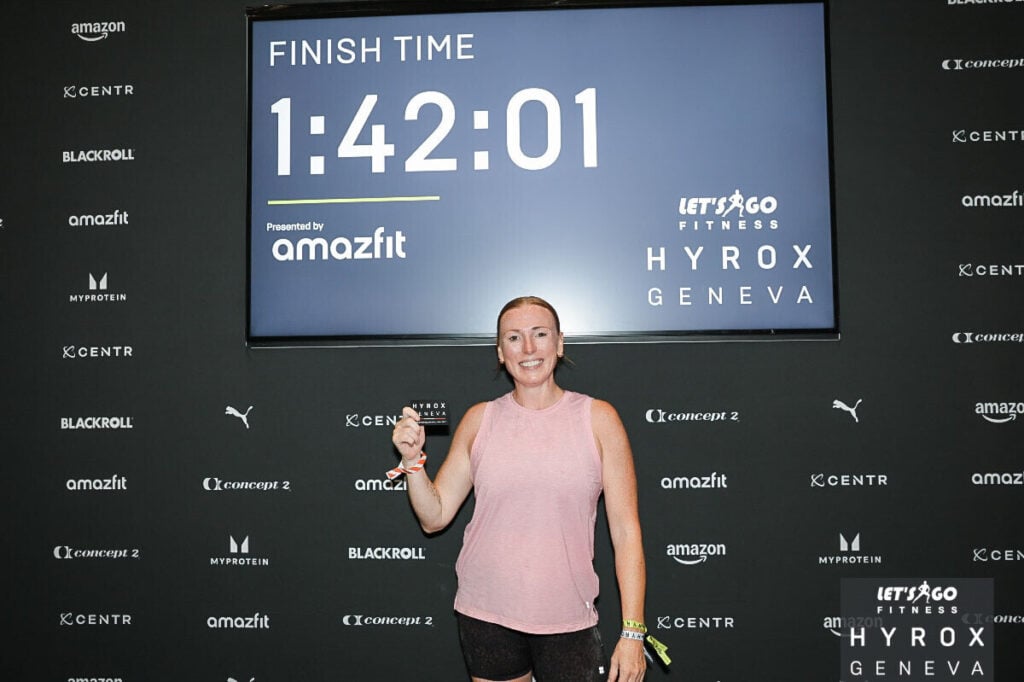
So, approximately 10 minutes slower than my doubles time last year.
But here’s the thing.
Last year, I was sharing the workload of the stations with a partner.
This year, I completed every single station myself.
And while my finishing time was slower, I felt so much stronger and more capable throughout the race.
The sled push felt good. The farmer’s carry felt comfortable. I was significantly stronger on the sandbag lunges, and my running felt more manageable.
I also had a stitch, digestive discomfort, a penalty and a few moments where I probably held myself back more than I needed to.
So, although I didn’t quite hit my target, I came away feeling like there’s still more in me. And checking on ranking coming 22nd in my age group is far better than I would have expected.
And that’s actually quite exciting.
Does a Slower Finish Time Mean I Was Less Fit?
Absolutely not.
I think it’s important to put race times into context.
Comparing a doubles race with a solo race isn’t a like-for-like comparison.
In doubles, you share the work at the stations. In solo, you have to complete everything yourself.
So although I was 10 minutes slower overall, I was taking on a much bigger individual workload.
And that really is the biggest takeaway for me.
Progress isn’t always about getting a faster time or seeing a smaller number on the scales. Sometimes it’s about being able to do more than you could before.
A year ago, I couldn’t imagine taking on HYROX solo.
This year, I did it.
And I felt stronger doing it.
What I Would Do Differently for My Next HYROX
Having watched the footage back and reflected on the race, there are definitely things I’d change if I decide to do another one.
Firstly, I’d continue working on my running.
Although it’s improved, it’s still my weakest area, and I know there’s room to get faster.
I’d also like to do more HYROX-specific simulations, particularly practising moving between running and the stations when already fatigued.
I think I’d benefit from more practice on the sled pull and wall balls, especially making sure my technique is consistent.
I’d also rethink my pre-race nutrition and meal timing, taking into account how my body is digesting food while I’m still on a low maintenance dose of Mounjaro.
And finally, I’d work on being a little more confident in pushing myself at certain stations.
Looking back, there were definitely moments when I think I had more to give.
Of course, it’s much easier to say that when you’re sitting comfortably watching the footage than when you’re actually in the middle of the race!
Why I Think HYROX Is a Great Challenge for Women Over 40
One of the things I love about HYROX is that it gives you something to train for.
It’s not just about going to the gym to burn calories or change how your body looks.
You’re training to become stronger, fitter and more capable.
And those are all things that become increasingly important as we move through our 40s and beyond.
Strength training helps us maintain muscle mass and supports bone health. Cardiovascular training improves our aerobic fitness, while power-based movements help us continue developing the ability to move quickly and explosively.
These are all qualities I want to maintain as I get older.
HYROX brings those different elements together and gives me a reason to keep working on them.
And what I love about the events is the variety of people taking part.
There are people of different ages, body shapes, sizes and fitness levels, all challenging themselves in their own way.
You don’t have to be an elite athlete to have a go.
You do need to prepare properly, build up your fitness and respect how challenging the event is, but you don’t have to be the fastest person there.
And you certainly don’t have to be in your 20s!
Will I Do Another HYROX Solo Race?
When I crossed the finish line, my immediate reaction was, “Never again!”
But now that I’ve had a little time to reflect, I’m not so sure.
Because I know there’s room for improvement.
I know I can get better at running. I know there are stations where I could push a little harder, and I know there are things I could do differently in my preparation.
So perhaps there will be another HYROX solo race in my future.
We’ll see!
But regardless of whether I race again, I’m really pleased that I challenged myself to do this.
Twelve months ago, I was adamant I would never do HYROX solo.
Now I’ve done it, and I know I’m capable of more than I thought.
And if you’re a woman in your 40s who has been thinking about taking on a new fitness challenge, whether that’s HYROX, a running event, a triathlon or something completely different, I really encourage you to work towards it.
You don’t have to be the fastest, the strongest or the fittest.
You just have to be willing to put the work in and give yourself a chance.
Because getting older doesn’t mean you have to stop challenging yourself.
Keep showing up, keep getting stronger and keep seeing what your body is capable of.
And if you’ve been thinking about doing HYROX, perhaps this is your sign to start training for one!
Affiliate disclosure: This post contains affiliate links, which means I may earn a small commission if you make a purchase through one of my links, at no additional cost to you. I only share products I’ve personally used or genuinely recommend.
Medical disclaimer: This post shares my personal fitness and weight-loss experience and is not intended as medical advice. If you take medication that affects digestion or appetite, speak with your prescribing clinician about managing nutrition and hydration around endurance exercise.



Leave a Reply